Missing Periods, Heavy Periods and Sport: What Athletes Should Know
There was a time when losing your period because you trained hard was considered weirdly normal. Many athletes and even their doctors and coaches seem to accept that periods stop when training is ramped up and accept it as a sign that the person was just incredibly fit.
Thankfully, the conversation seems to be changing. Missed periods should never be ignored regardless of whether you're an elite athlete, training hard or some who does very little exercise.
Your menstrual cycle isn’t a monthly fitness test and having a slightly different cycle from someone else doesn’t automatically mean anything is wrong. Bodies are wonderfully individual and periods can change for all sorts of reasons BUT a significant or ongoing change in your normal menstrual pattern can also give you useful information about what is happening elsewhere in your body.
If your period suddenly disappears, or, on the flipside, if your period is so heavy you’re regularly leaking through products, changing your plans around your period or feeling completely wiped out - you should talk to your doctor about what might be going on (if anything) and measures you can take.
Being committed to sport shouldn’t mean becoming exceptionally good at ignoring what your body is telling you.
Your menstrual cycle can tell you more than you might think
A period is easy to think of as an annoying monthly event that needs to be managed, particularly when you’re trying to fit it around training, games, swimming, races or competitions. From a health perspective, though, menstrual patterns can provide useful information.
The American College of Obstetricians and Gynecologists has described menstruation in adolescents as an additional vital sign, because changes in a young person’s menstrual pattern can sometimes help identify underlying health issues. (ACOG)
That doesn’t mean you need to panic because your period arrived two days later than it did last month. Menstrual cycles aren’t always clockwork and they don’t need to arrive every 28 days to be considered healthy.
What is useful is getting to know what is broadly normal for you. If you have a reasonable idea of how often your period usually comes, how heavy it tends to be and how you normally feel, you’re much more likely to notice when something changes significantly - and that is when you should get advice from your doctor.
Is it normal for athletes to lose their periods?
Missing periods can happen for many different reasons. Pregnancy is one obvious possibility, while hormonal contraception such as an IUD can make bleeding lighter, less frequent or stop it altogether. Stress, illness and a range of health conditions can affect menstrual cycles too.
For athletes, however, one particularly important factor to understand is what’s known broadly as ‘low energy availability’.
Low energy availability happens when the amount of energy you’re consuming through food isn’t enough to cover both the energy being used during exercise and all of the other jobs your body needs energy for.
You can think of your body as having an energy budget. Training needs energy, but so do your brain, heart, bones, immune system, hormones and countless other processes quietly happening in the background every day. When there consistently isn’t enough energy available to cover everything, the body may begin making compromises.
Reproductive function can be one of the systems affected, which is why periods can become irregular or disappear.
Low energy availability can also form part of a broader condition known as Relative Energy Deficiency in Sport, or RED-S.
What is RED-S?
RED-S describes a collection of health and performance consequences that can occur when an athlete experiences problematic low energy availability.
Importantly, RED-S isn’t exclusively something that affects women and it isn’t simply another term for an eating disorder. An athlete can end up under-fuelled intentionally or completely unintentionally, and it can happen across many different sports and body types.
The International Olympic Committee’s 2023 RED-S consensus statement discusses a wide range of potential effects associated with problematic low energy availability, including impacts on reproductive function, bone health and athletic performance. (British Journal of Sports Medicine)
This is why a period disappearing shouldn’t automatically be celebrated as evidence that someone is training exceptionally hard. It needs context, particularly if the change coincides with increased training, changes in eating, injuries, fatigue or other symptoms.
How can low energy availability happen?
There isn’t one particular type of athlete who develops low energy availability, and you certainly can’t determine whether someone is adequately fuelled simply by looking at their body.
Sometimes training volume increases dramatically but food intake doesn’t increase with it. An endurance athlete might suddenly add several extra sessions a week, for example, without realising how much additional energy their body now needs.
In other cases there may be pressure to lose weight or alter body composition, particularly in sports where appearance, weight categories or power-to-weight ratios receive a lot of attention. Busy training and competition schedules can make regular meals difficult, while some athletes simply find that their appetite doesn’t keep up with their energy expenditure.
Recovery matters too. A demanding training programme, limited opportunities to eat properly and insufficient recovery can all contribute to the bigger picture.
The important thing to remember is that low energy availability isn’t something you can diagnose based on how thin, muscular, fit or healthy someone appears.
Why do missing periods matter?
If periods stop because the body isn’t receiving enough energy, the concern isn’t really the missing bleed itself. It’s what that menstrual disruption may be telling you - as we said, periods can actually be very useful health markers.
The IOC’s RED-S consensus discusses potential effects across multiple body systems, including reproductive and endocrine function, metabolism and bone health. (British Journal of Sports Medicine)
Bone health is particularly important for teenagers and younger athletes because adolescence is a major period of bone development. That doesn’t mean every irregular period is evidence of RED-S, but it does mean a persistently missing or significantly altered menstrual cycle shouldn’t simply be written off as something that happens to sporty people.
If your periods stop unexpectedly, become persistently irregular or change significantly from your usual pattern, it’s worth talking to an appropriate healthcare professional rather than assuming that training is the explanation.
When you go, it can be helpful to have a rough idea of when your periods started, how regular they normally are, when you last had one and whether anything else has changed. That might include your training volume, eating patterns, stress, injuries, medication or hormonal contraception.
You definitely don’t need a perfectly colour-coded menstrual spreadsheet but making notes about your cycle on your phone or in a diary is worthwhile and will definitely help you work out patterns and provide information you can share with your doctor.
Heavy periods deserve attention too
At the opposite end of the spectrum is the period that is extremely heavy.
For an athlete, heavy bleeding can create some very obvious practical problems. You may be worried about leaking, making repeated bathroom stops during training, cramps, having to change period products halfway through a long session or waking repeatedly during the night because you’re concerned about leaks.
Some people avoid swimming when they have their period, while others avoid training, competitions or overnight trips because managing their bleeding feels too difficult.
But heavy periods can cause more than disruptions - they can have health implications too. ACOG defines heavy menstrual bleeding in terms of excessive menstrual blood loss that interferes with a person’s physical, social, emotional or material quality of life. It also recommends considering anaemia and iron stores when heavy menstrual bleeding is being assessed. (ACOG)
Signs that bleeding may be unusually heavy can include needing to change period protection every one to two hours, bleeding for more than seven days, regularly leaking through clothing or experiencing symptoms such as tiredness, dizziness or breathlessness. (Healthier Together)
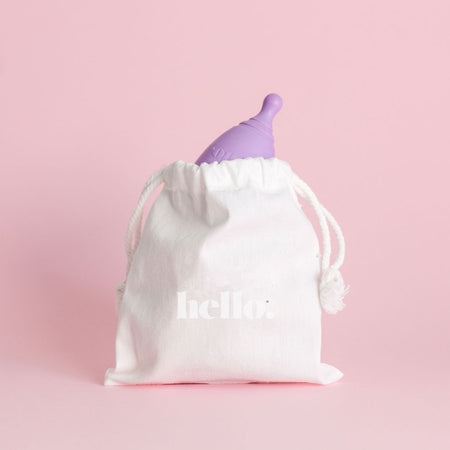
You don’t have to calculate your menstrual blood loss down to the millilitre before you’re entitled to ask whether something is going on. Periods can be very hard to accurately ‘measure’. Menstrual cups and discs provide the most reliable gauge in terms of volume but in general, the best way to determine if you have a heavy menstrual cycle is whether it impacts school, work, sport, sleep or everyday life - all reasons to have a conversation with a healthcare professional.
Heavy periods, athletes and iron
Iron is important for everyone, but it receives particular attention in sport because it plays a role in oxygen transport and other processes that are central to exercise and athletic performance.
People who menstruate lose iron through menstrual blood, which is one reason menstrual health becomes relevant when looking at an athlete’s overall iron requirements.
A systematic review involving high-level female athletes found that iron deficiency was associated with reduced endurance performance among athletes who were iron deficient, highlighting the importance of identifying and appropriately managing deficiency. (PubMed)
Heavy menstrual bleeding can increase the risk of depleted iron stores further. ACOG recommends that adolescents presenting with heavy menstrual bleeding are assessed for anaemia, including consideration of ferritin levels. (ACOG)
If you have heavy periods and are also experiencing persistent tiredness, dizziness, breathlessness, headaches, weakness or a noticeable drop in exercise tolerance, mention those symptoms when you see a health professional.
Those symptoms can have plenty of possible causes, so it’s also important not to ‘self diagnose’ yourself with iron deficiency or start taking high-dose iron because someone on social media said you should. Proper testing and individual clinical advice are a much better approach.
Can better period products help with heavy periods?
Absolutely. The right period products can make a huge practical difference when you’re trying to train, travel or compete with a heavy flow.
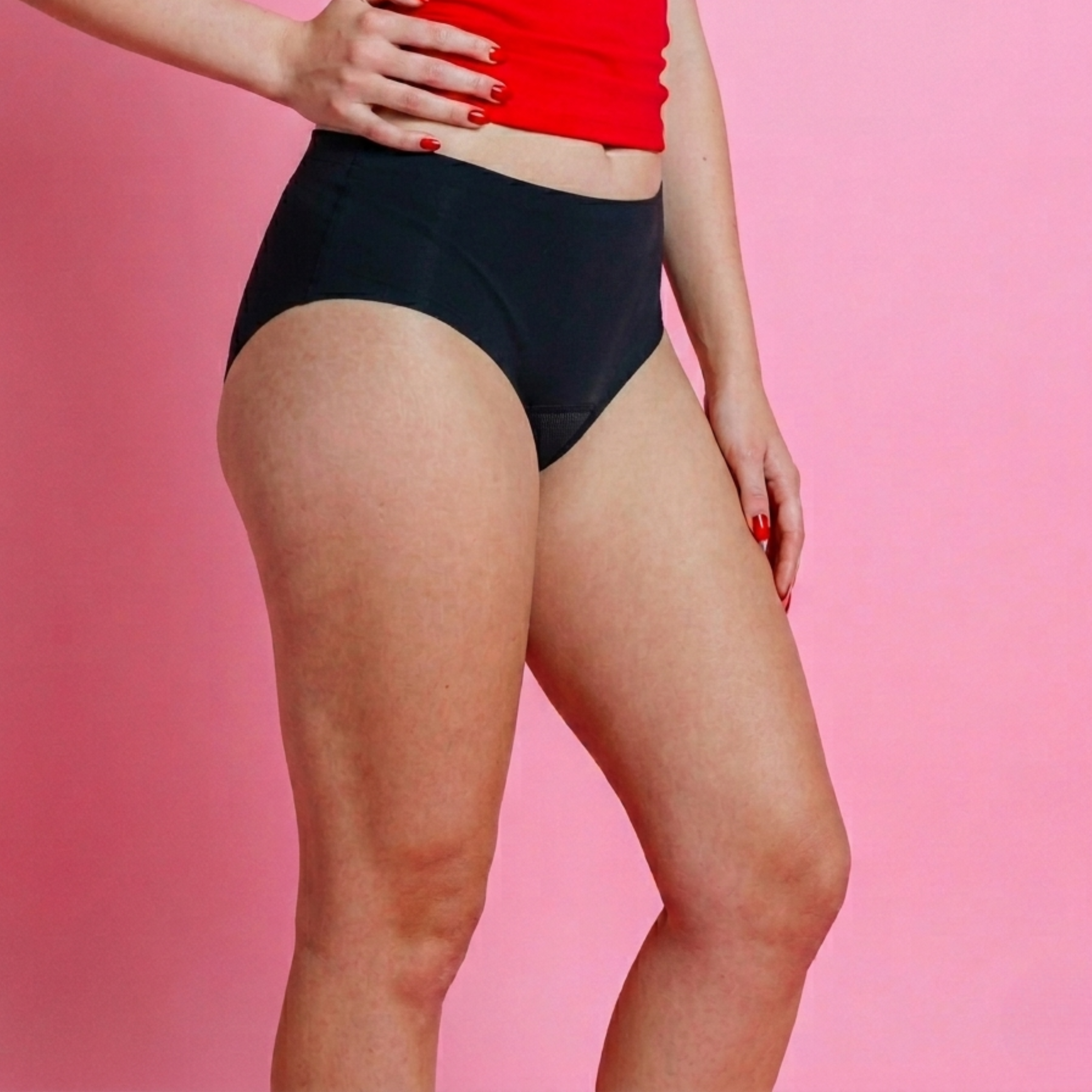
Hello Period’s Best in Show boxer holds up to 50 mL, giving you high-capacity protection without having to rely on a bulky disposable pad. The reusable Overnight Success maxi pad holds up to 60 mL, making it another useful option for heavier days, overnight protection or as backup during long training days. (Hello Period)
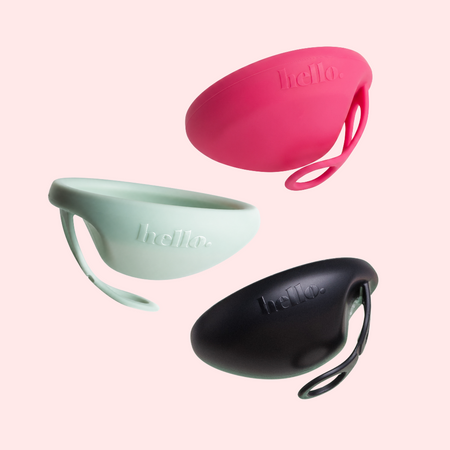
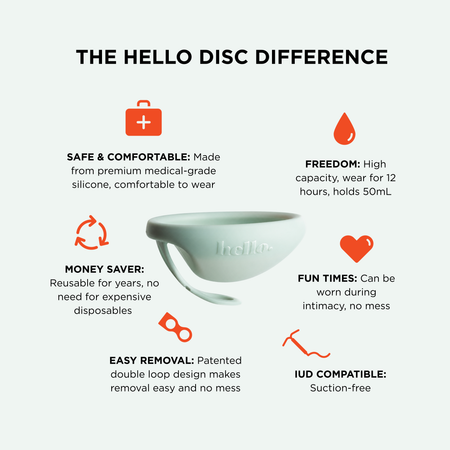
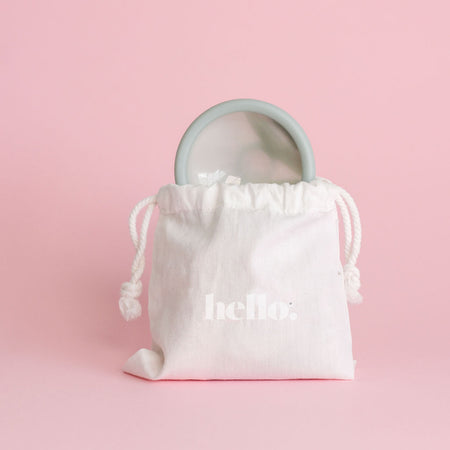
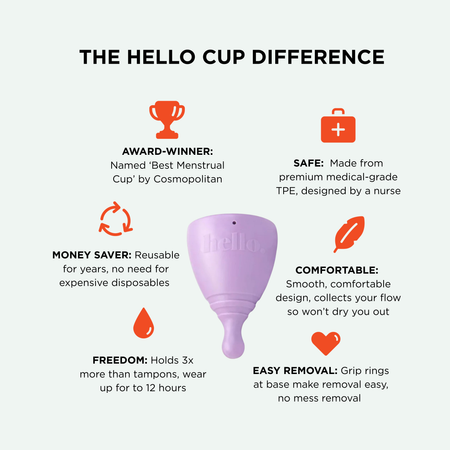
If internal period care suits you, the Hello Disc holds up to 50 mL and can be worn for up to 12 hours depending on your flow, which can be particularly handy when you have long training sessions, races or competitions and don’t want to be changing products constantly. (Hello Period)
The important distinction is that high-capacity period products help you manage heavy bleeding. They don’t treat whatever may be causing unusually heavy periods.
Better period care should make sport and everyday life easier. It shouldn’t become a reason to put off getting symptoms checked.
Period pain doesn’t have to be something you simply tolerate
Some discomfort during a period is common, but pain that repeatedly stops you from training, going to school, working, sleeping or doing the things you normally do deserves more attention.
Conditions including endometriosis can cause significant period and pelvic pain, although only an appropriately qualified healthcare professional can assess what is causing your individual symptoms.
Athletes can be especially good at pushing through discomfort. That mindset has its place. Sometimes getting through tired legs in the final part of a race requires a little grit.
But resilience isn’t the same thing as ignoring every signal your body sends you. Being capable of finishing a training session through severe period pain doesn’t make that pain medically insignificant.
Period changes athletes should pay attention to
You don’t need to analyse every cycle looking for something wrong. What matters much more is noticing a meaningful change from your normal pattern.
If your periods unexpectedly disappear, particularly around the same time as a major increase in training, reduced food intake, changes in weight, injuries or unusual fatigue, it is worth getting advice.
The same applies if your cycle becomes persistently much more irregular, your bleeding suddenly becomes dramatically heavier or you’re regularly flooding through period products.
Heavy bleeding accompanied by unusual fatigue, dizziness, weakness or breathlessness is also something to discuss with a healthcare professional because blood loss and iron deficiency may need to be considered.
And if period pain repeatedly prevents you from participating in normal daily activities, you don’t need to prove how tough you are by continuing to ignore it.
What should coaches know about periods and sport?
Menstrual health shouldn’t be entirely the athlete’s responsibility. Coaches, clubs and sporting organisations can make an enormous difference simply by creating an environment where periods can be talked about without embarrassment.
That doesn’t require coaches to become menstrual health experts but we’d love to see them normalise the discussion of periods.
If you’re a coach - start with the practical things like making it easy for your team to take bathroom breaks. Have period products available in bathrooms or have a programme where you help supply reusable products at the start of each season for those who want them. Avoid making jokes about periods and make it clear that athletes can raise concerns privately if they need to.
That said, it’s also important that if you notice an athlete might need additional support when it comes to their period, that you direct them to a professional rather than try to diagnose something yourself.
An article in the British Journal of Sports medicine highlighted the barriers that elite rugby face when discussing menstrual concerns, particularly with male staff so it’s important for sporting environments to actively make these conversations easier rather than simply assuming an athlete will speak up if something is wrong. (British Journal of Sports Medicine)
What should parents of young athletes know?
One of the most useful messages to give a teenager is that periods don’t need to be a secret they manage alone. For additional reading on this topic read our blog Periods & Sport: A Confidence Guide for Teen Athletes.
If your teen’s periods change significantly, stop unexpectedly, become extremely heavy or are causing severe pain, it’s worth getting appropriate medical advice rather than assuming it is happening because they are active.
Ensuring they are getting enough fuel from food is also important. Not only do they need more when training, but their bodies are growing and developing and need good nourishment and nutrition.
If you have concerns about a teenager’s menstrual cycle, eating, fatigue, recurring injuries or training load, seek support from appropriately qualified medical and sports-nutrition professionals rather than trying to piece together a diagnosis online.
Get to know your normal
One of the easiest things you can do for your menstrual health is simply keep track of your cycle. This does not need to become a full-scale data analytics project - just keep notes on your phone or in a diary.
You might record the first day of your period, roughly how long you bleed for, whether your flow is light, moderate or heavy and any particularly noticeable symptoms. If sport is a big part of your life, you could also make a note of major changes in training, energy levels or pain.
Over time, that gives you a personal baseline which becomes very useful when establishing patterns and changes.
Being an athlete doesn’t mean ignoring your body
Sport teaches us to be resilient, work through challenges and occasionally push beyond the point where we would quite like to stop, but resilience also means knowing when something deserves attention.
Listen to your body and always talk to someone when you have concerns or questions.
Medical note: This article provides general educational information and isn’t a substitute for individual medical advice. Speak with a qualified healthcare professional if you have concerns about changes to your menstrual cycle, missing periods, heavy bleeding, significant pain, iron deficiency, RED-S or your individual health.