The Reusable Revolution: Why More Women Are Rethinking Period Care
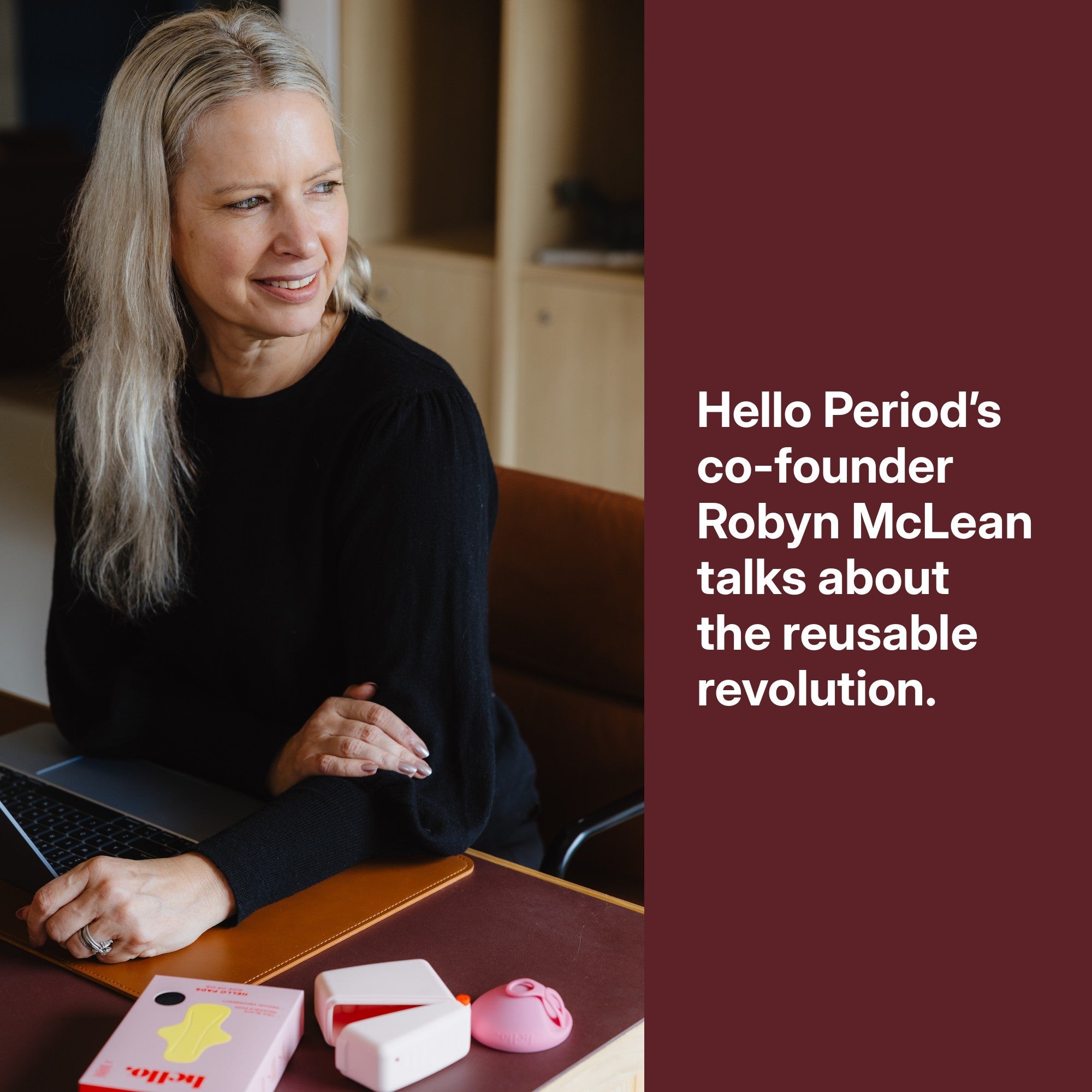
From ultra-thin reusable pads to innovative menstrual cups and discs, period care has undergone a quiet revolution. Today's reusable products are more sophisticated, comfortable and convenient than ever before. So why are so many of us still reaching for disposables? We asked Hello Period’s co-founder about the technology transforming period care, the misconceptions holding people back and why making the switch might be one of the best decisions you make for your body, wallet and the planet.
Q: Reusable period products aren't exactly new. Why are more people suddenly taking notice?
Robyn: I think we're finally seeing a real shift in how people think about periods. For decades, disposable pads and tampons have been the default, largely because that's what we grew up using. But when you look at how much innovation has happened in almost every other area of our lives, period care has been surprisingly slow to evolve.
That's changing, and it's exciting.
Advances in fabric technology, materials and product design mean reusable period care is now a world away from what people might imagine. We're talking incredibly thin and absorbent reusable pads, comfortable menstrual cups and innovative menstrual discs that can hold more fluid than traditional products.
The biggest shift is that women are discovering reusables aren't simply an environmentally friendly alternative. They can actually be a better experience.
At Hello Period, we've always believed sustainability shouldn't require sacrifice. You shouldn't have to put up with something bulky, uncomfortable or inconvenient just because it's better for the planet. The product itself needs to be brilliant.
And I think that's why we're seeing so many people make the switch. They're not just choosing reusable products because they feel they should. They're choosing them because they genuinely prefer them.
Q: Let's talk about reusable pads. Haven't they traditionally been quite bulky and old-fashioned?
Robyn: That's probably one of the biggest misconceptions we encounter! When some people hear "reusable pad", they imagine something thick, uncomfortable and vaguely old-fashioned but the reality couldn't be more different.
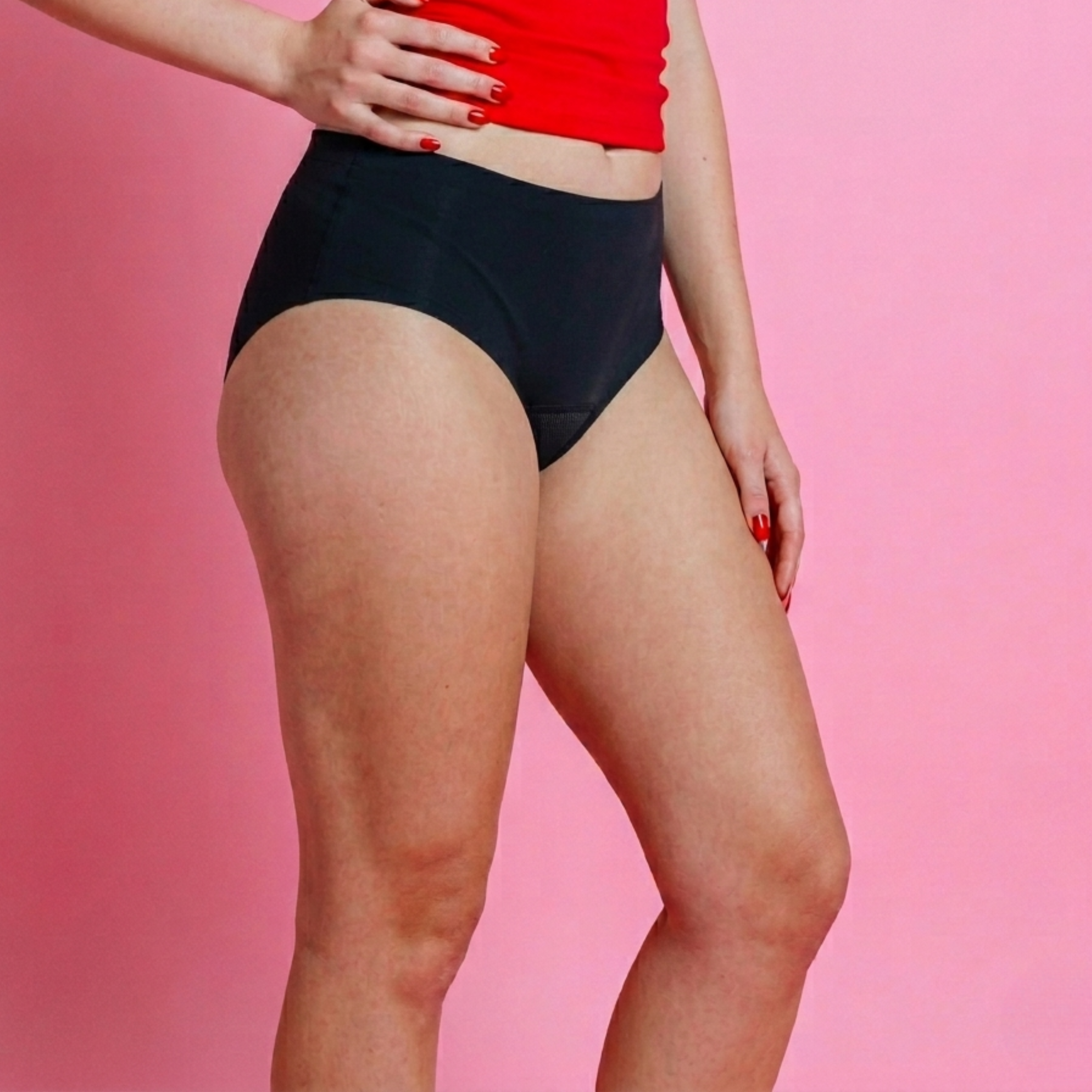
Modern fabric technology has completely transformed what reusable pads can look and feel like. Our Hello Pads are incredibly slim, soft and absorbent. They're designed to feel more like a natural extension of your underwear than a traditional sanitary pad.
We use clever multi-layer fabrics that work together to quickly draw moisture away from the surface, absorb it and help keep you feeling dry. What's remarkable is how much absorbency can be achieved without all the bulk.
For example, our regular Hello Pads hold up to 30ml of fluid, roughly equivalent to six regular tampons. That's a lot of protection in a surprisingly thin pad.
They're also comfortable against your skin. You don't get that plasticky feeling, rustling or irritation that some people experience with disposable pads.
For me, this is one of the most exciting areas of period care innovation because it's taking a product people are already familiar with and making it significantly better.
Q: How do reusable pads stay in place without an adhesive backing?
Robyn: Thoughtful design makes all the difference.
Our Hello Pads and liners have secure dome fasteners that wrap around the gusset of your underwear. We've also incorporated a discreet silicone grip on the underside to help prevent slipping, sliding and bunching.
It's a really simple feature, but an important one. There's nothing worse than a pad that moves around when you're going about your day.
We wanted to create something women could confidently wear to work, while exercising, out walking or overnight, without constantly having to think about it.
And because they're reusable, we've been able to focus on making them feel more like a quality garment than something designed to be thrown away after a few hours.
Q: What about reusable liners? Are they just smaller versions of the pads?
Robyn: Our reusable liners are one of those products that people often don't realise they need until they try them!
They're beautifully thin, discreet and designed for everyday comfort. But despite their slim profile, they can absorb up to 10ml, roughly equivalent to two regular tampons.
They're perfect for spotting, light period days, discharge or as a little extra backup when you're wearing a menstrual cup or disc.
I think disposable liners have become such an automatic purchase for many women. They're used every day, sometimes for years, without much thought about how many end up in the rubbish.
Switching to a reusable liner is such an easy change because you're not really altering your routine. You're simply replacing something disposable with something you can wash and wear again. And once you've got a few in rotation, you don't need to keep remembering to buy more.
Q: Can Hello Pads and liners also be used for bladder leakage?
Robyn: Absolutely, and this is something we really want more women to know about.
Light bladder leakage is incredibly common, whether it's after having children, during perimenopause or menopause, or simply when laughing, sneezing, running or jumping.
Yet it's something women often feel embarrassed discussing, which is a shame because it's such a normal experience.
Our reusable pads and liners can be a really practical option for managing small amounts of bladder leakage, depending on the level of protection you need.
For occasional drips, a liner might be all you need, while a more absorbent pad can provide additional reassurance.
One of the things I love about this is that the same products can serve different purposes throughout your life. You might originally buy reusable pads for your periods, then continue using them for occasional bladder leakage later on.
And importantly, light bladder leakage doesn't have to mean buying disposable incontinence products month after month. There are more comfortable, discreet and sustainable options available.
Of course, if bladder leakage is new, worsening or affecting your quality of life, it's worth discussing it with a healthcare professional. It's common, but there are often treatments and exercises that can help.
Q: Surely washing reusable pads and liners is a hassle?
Robyn: This is the question we get all the time, and I completely understand it because we've been conditioned to think that throwing something away is the easiest option.
But honestly, caring for reusable pads is surprisingly straightforward.
After use, you rinse them and then pop them in the washing machine with your regular laundry, following the care instructions. Allow them to dry thoroughly and they're ready to wear again.
There's no complicated cleaning ritual or special equipment required.
We don't throw our underwear away after wearing it once, so why are we still throwing away our pads?
When you look at it that way, the whole concept of disposable period care starts to feel a little strange.
We're already washing underwear, socks, towels and countless other things that come into contact with our bodies every day. Adding a few reusable pads to the laundry really isn't a big leap.
For people who are out and about, a small waterproof wet bag makes it easy to discreetly store a used pad until you get home.
It's often the idea of washing them that's more confronting than the reality.
Q: How important is fabric quality when choosing reusable pads?
Robyn: It's incredibly important, particularly because these products are worn against such a sensitive area of the body.
At Hello Period, we put a huge amount of thought into the materials we use. Our reusable pad and liner fabrics are OEKO-TEX certified, which means they've been tested against criteria for harmful substances.
We also don't add PFAS to our pads and liners.
People are becoming much more conscious of what goes into products they use on or close to their bodies, and rightly so.
But quality isn't just about the materials. It's also about how a product is constructed, how it performs after repeated washing and whether it remains comfortable over time.
We want our products to be something people feel confident investing in, because durability is fundamental to the whole idea of reusable care.
Q: Hello Period started with menstrual cups. What makes the Hello Cup so different from a tampon?
Robyn: The Hello Cup was our original product, so it will always have a special place in my heart!
A menstrual cup is a small, flexible cup that sits inside the vagina and collects menstrual fluid rather than absorbing it.
That distinction is important. Tampons absorb menstrual fluid, while a cup simply collects it, meaning it doesn't absorb the surrounding vaginal moisture in the same way.
Our Hello Cups are made from medical-grade TPE and are designed to be worn for up to 12 hours, depending on your flow.
Instead of changing a tampon every few hours, you can potentially go much longer between emptying your cup - although on heavier days you may need to empty it more frequently.
They're fantastic for swimming, exercising, sleeping and travelling.
One of the biggest advantages is the convenience of not needing to carry a constant supply of tampons around. You simply empty, rinse and reinsert your cup as needed.
I think a lot of people initially try a menstrual cup because they want to reduce waste or save money, but they stay with it because they love the freedom.
The Hello Cup has also received international recognition, including being named Best Menstrual Cup by Cosmopolitan, which was an incredibly proud moment for us.
Q: Menstrual discs seem to be everywhere at the moment. What's behind their growing popularity?
Robyn: Menstrual discs are one of the most exciting developments in period care, and we've seen incredible enthusiasm for them around the world.
They are different from menstrual cups in a few ways.
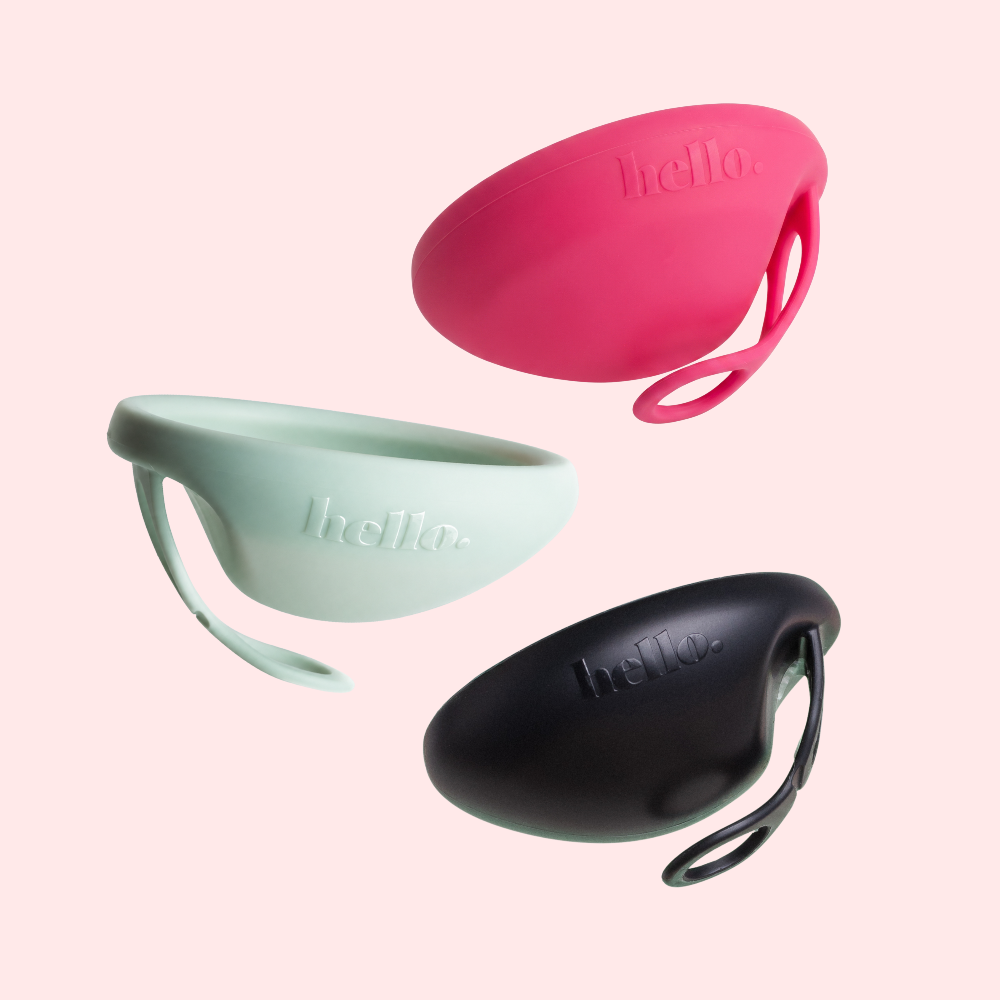
A menstrual cup sits lower in the vaginal canal and forms a seal, whereas a menstrual disc sits higher up, in the vaginal fornix, tucked behind the pubic bone. It's held in place without relying on suction.
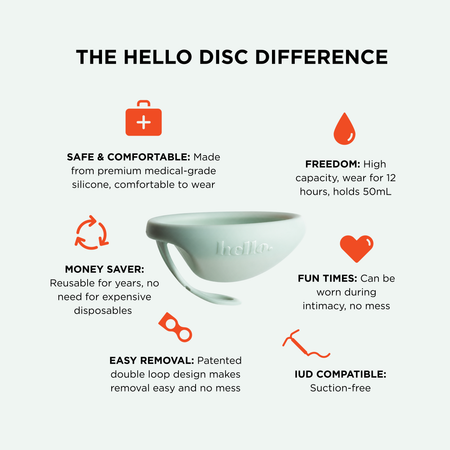
One of the reasons people love discs is their capacity. Our Hello Disc can hold up to the equivalent of ten regular tampons, which makes it particularly appealing for people with heavier periods.
Like cups, discs can be worn for up to 12 hours, depending on flow and individual needs.
They're also great for active lifestyles. You can swim, run, go to the gym, sleep and get on with your day without having to think about changing a pad or tampon.
Another point of difference is that menstrual discs can be worn during penetrative sex, which isn't possible with a menstrual cup or tampon. However, it’s important that people know they’re not intended as a contraceptive and they don't protect against sexually transmitted infections.
For many people, a disc offers a level of convenience they simply haven't experienced with traditional period products.
Q: What makes the Hello Disc different from other menstrual discs?
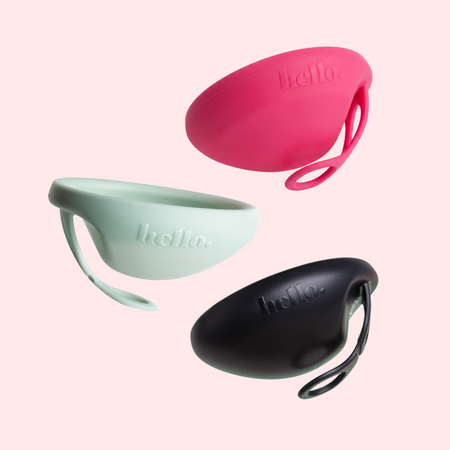
Robyn: The biggest innovation is our patented double-loop removal tab.
When we developed the Hello Disc, we recognised that one of the biggest barriers people encountered with menstrual discs was removal. Traditional discs can be difficult to reach and hook out, and removal can sometimes be messy.
We wanted to solve that problem.
Our patented double-loop design gives users an easier-to-reach removal point and more control when taking the disc out, helping make the process more straightforward and less messy.
It's one of those innovations that sounds simple, but it makes a huge difference to the user experience.
We spent a lot of time refining the design because we believe reusable period care should be accessible, even for people who have never used an internal menstrual product before.
The Hello Disc has gone on to become one of our most loved products globally, and we're incredibly proud of the feedback we've received from customers.
It's proof that innovation in menstrual care doesn't always mean reinventing the entire category. Sometimes it's about identifying a genuine problem and designing a smarter solution.
Q: Is there a learning curve when switching from tampons to a cup or disc?
Robyn: There can be, and I think it's important to be upfront about that.
Most of us have spent years using disposable products, so naturally a different type of product might take a little practice. But let’s not forget, learning to use a tampon also had a learning curve for many.
With cups and discs, there's a technique to insertion, positioning and removal. Some people get it right almost immediately, while others need a few cycles to feel completely confident.
My advice is to be patient with yourself and try your new product at home when you're relaxed, rather than rushing to figure it out five minutes before leaving for work!
We've created lots of educational resources to help people understand how their products work, because knowledge makes such a difference.
Once people find the right product and get comfortable using it, the feedback we hear most often is, "I wish I'd tried this years ago."
Q: Are reusable period products actually more affordable?
Robyn: Over time, absolutely. And for many people, that's one of the biggest attractions.
Think about how much money you spend on disposable pads and tampons every month. It might not seem like a significant amount each time you're standing at the supermarket checkout, but over five, ten or twenty years, it really adds up.
A menstrual cup or disc is a one-off purchase that can last for years with proper care, depending on the product and its condition.
Reusable pads and liners can also be washed and worn repeatedly, reducing the need to continually replace disposable products.
Of course, there's an upfront cost, and we recognise that this can be a barrier for some people. But when you look at the cost per use over the lifetime of the product, reusables can be incredibly economical.
And there's another benefit that people don't always consider: not having to make emergency trips to the supermarket because you've run out of tampons or pads!
Q: What about the environmental impact? Does switching really make a difference?
Robyn: It's one of the main reasons we started Hello Period.
Think about the number of periods a person might experience over their lifetime and the disposable products they use each month. We're talking about thousands of pads and tampons per person, many of which contain plastic.
Disposable pads can contain plastic in their backing, packaging and other components. Once thrown away, that waste can remain in the environment for a very long time.
Reusable products aren't impact-free. They require resources to manufacture and, in the case of washable pads, water and energy to clean. But because they're designed to be used again and again, they can dramatically reduce the amount of single-use waste we generate.
At Hello Period, we've always been focused on demonstrating that a different approach to periods is possible.
Sustainability is central to how we think about product design, materials and the future of menstrual care.
But what excites me most is the collective impact - one person switching might seem like a small thing, but multiply that by thousands or millions of people and the potential reduction in waste becomes enormous.
Q: Do you think attitudes towards periods themselves are changing?
Robyn: Definitely, although there's still work to be done.
For far too long, periods have been treated as something embarrassing, inconvenient or best not discussed.
One of the great things about reusable period care is that it encourages people to understand their bodies better. When you use a cup or disc, for example, you can actually see how much menstrual fluid you're collecting, which can be really interesting and informative.
People often discover that their perception of how much they bleed doesn't necessarily match the reality.
I think there's also a growing expectation that period products should be thoughtfully designed, transparent about materials and genuinely meet people's needs.
We shouldn't have to settle for products that are uncomfortable, wasteful or expensive simply because that's what has always been available.
Q: With so many options, how do you choose the right reusable product?
Robyn: The wonderful thing about modern period care is that there's no one-size-fits-all solution.
Some people absolutely love reusable pads because they're familiar, comfortable and easy to incorporate into their routine.
Others prefer a menstrual cup because they want an internal product with good capacity and the freedom to swim or exercise without worrying about their period.
And some people find that a menstrual disc completely transforms their experience, particularly if they want a suction-free alternative with a high capacity.
Plenty of our customers use a combination of products, too.
You might choose a Hello Disc for heavier days, reusable pads for overnight backup and liners for spotting or lighter days.
And even if you've finished menstruating, reusable pads and liners can still be useful for managing light bladder leakage.
It's about having choices and finding what works for your body, flow and lifestyle, rather than assuming there's one perfect product for everyone.
Q: Finally, what would you say to someone who's curious about switching but hasn't taken the plunge?
Robyn: I'd say start small and give yourself the opportunity to discover something better.
You don't need to overhaul your entire period routine overnight. Try replacing your disposable liners with reusable ones. Give reusable pads a go. Or, if you're ready to move away from tampons, experiment with a cup or disc.
You might be surprised at how quickly your preferences change.
The biggest message I want people to take away is that reusable period care isn't about making sacrifices for sustainability.
It's about better design, better technology, more choice and increased reliability and comfort.
We've come such a long way in period product innovation, yet so many people are still using the same disposable products they were introduced to as teenagers.