What To Expect From Your First Period: A Guide For Parents, Tweens and Teens
Getting your first period is one of those milestones that can feel completely normal and slightly terrifying at the same time.
The good news is that a first period usually isn’t nearly as dramatic as it can seem in your imagination but knowing what to expect, having a few period products ready and being able to ask questions without embarrassment can make the whole experience much easier.
Whether you’re a tween or teen wondering what your first period will be like, or a parent trying to make sure your child feels prepared, here’s what you need to know.
When do first periods usually start?
A first period is called ‘menarche’ and there is no single “right” age for it to happen.
While the average age for first periods to start is roughly 12 - 13 years, they can start several years earlier or later than that so rather that focussing on age, it often more helpful to look for the other signs of puberty that will give you an indication of whether your first period might be close.
Breast development is often one of the first obvious changes. Your once flat chest area will start to develop breasts. They don’t appear overnight but will gradually swell and you might decide you want to start wearing a sports bra for a bit more support. Periods tend to start a couple of years after you first notice your breasts developing.
Another development you’ll notice before your periods start is hair starting to grow under your arms and in your pubic area. Your hips might also get wider.
You will also start to get vaginal discharge. What is vaginal discharge? It is normally a clear or white mucus that you might notice on your underwear and it will likely start appearing several months before your first period. As long as it isn’t itchy, painful or smelly, it is very normal and nothing to be concerned about.
The key thing to remember when it comes to your first period is that you and your friends will likely all start your periods at different times. That is normal. If your bestie got her period at 11 but you are 14 and still don’t have a period, it doesn’t mean there is something wrong with you. However, it is really important to talk about any worries you have with your parents, caregivers or doctor.
So, what actually is a period?
It’s easier to feel relaxed about periods when you understand what they actually are because for some, anything that involves blood, feels a bit scary.
During your menstrual cycle, hormones cause the lining of your uterus to thicken in preparation for a possible pregnancy. If pregnancy doesn’t occur, that lining breaks down and leaves the body through the vagina. The blood, cells and mucus that come out are what we call a period. So actually a period isn’t just blood - it’s more than that!.
For parents, we recommend talking about and normalising period early. Even toddlers who see their mom inserting a cup, disc or tampon or using a pad and ask what it is for should be told that it’s how you manage your period. You don’t need to go into detail but hiding products and creating mistruths can make discussions down the line harder. Also, using straightforward words like uterus, vulva and vagina can help take some of the mystery and embarrassment out of the subject. Healthify and the NHS both recommend talking about periods openly and early rather than waiting for one big, awkward “period talk”. Lots of little conversations are usually easier than one intimidating conversation across the kitchen table.
What will the first period actually look like?
Probably not like the bright red splash of blood you might be picturing. First period can be surprisingly light and often look like a few spots in your underwear. It might not be bright red blood, either. Often it’s brown, dark red, pinkish or rusty rather than bright red. Brown period blood is generally just blood that has taken a little longer to leave the body.
It also isn’t usually a sudden gush. The NHS estimates that total blood loss across a typical period is around 20–90 millilitres, although it often looks considerably more once it has spread through a pad or period underwear.
Will periods be regular straight away?
Almost certainly not. One of the biggest misconceptions about periods is that they immediately settle into a perfect 28-day cycle. Teenage periods are often much less predictable.
Adolescent menstrual cycles commonly range from 21 to 45 days, particularly during the first years after menstruation begins. It can take time for the hormonal system controlling the menstrual cycle to establish a more predictable rhythm.
So while you might get your second period four weeks after your first, don’t be surprised if it doesn’t appear aging for six weeks or longer. That is completely normal! Keeping track can still be useful. Simply marking the first day of each period on a calendar on your phone or in a period track app can help you start noticing your own pattern. The goal isn’t to have a “perfect” cycle. It’s to learn what is normal for your own body.
What does a period feel like?
Sometimes, not very different at all but again, they will hit different for different people. You might notice period cramps in the lower abdomen, a sore lower back, tender breasts, bloating, tiredness, headaches or changes in mood. Some people experience almost no period symptoms, while others notice them quite clearly.
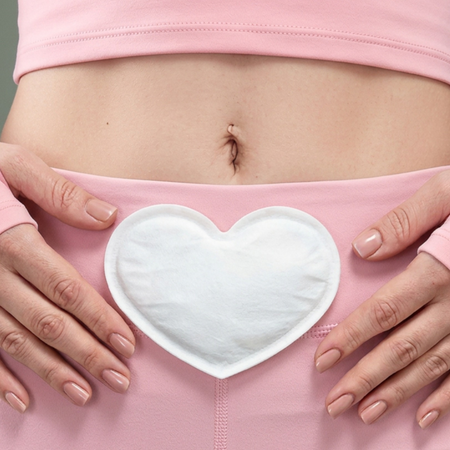
Gentle movement, warmth, rest and staying hydrated can all help with mild period discomfort. A warm bath or heat patch can feel especially good when cramps arrive.
The main thing you should know is that periods can occasionally be uncomfortable, but severe pain shouldn’t simply be accepted as something you have to put up with. If cramps are regularly stopping you from going to school, sleeping, playing sport or doing normal activities, talk to a parent, caregiver or healthcare professional.
Choosing your first period product
There are far more period products available now than there were a generation ago, which is great news. It also means staring at an entire supermarket shelf of products for the first time can feel slightly overwhelming.
There is no prize for choosing a particular type. The best period product is simply the one that makes you feel comfortable and confident.
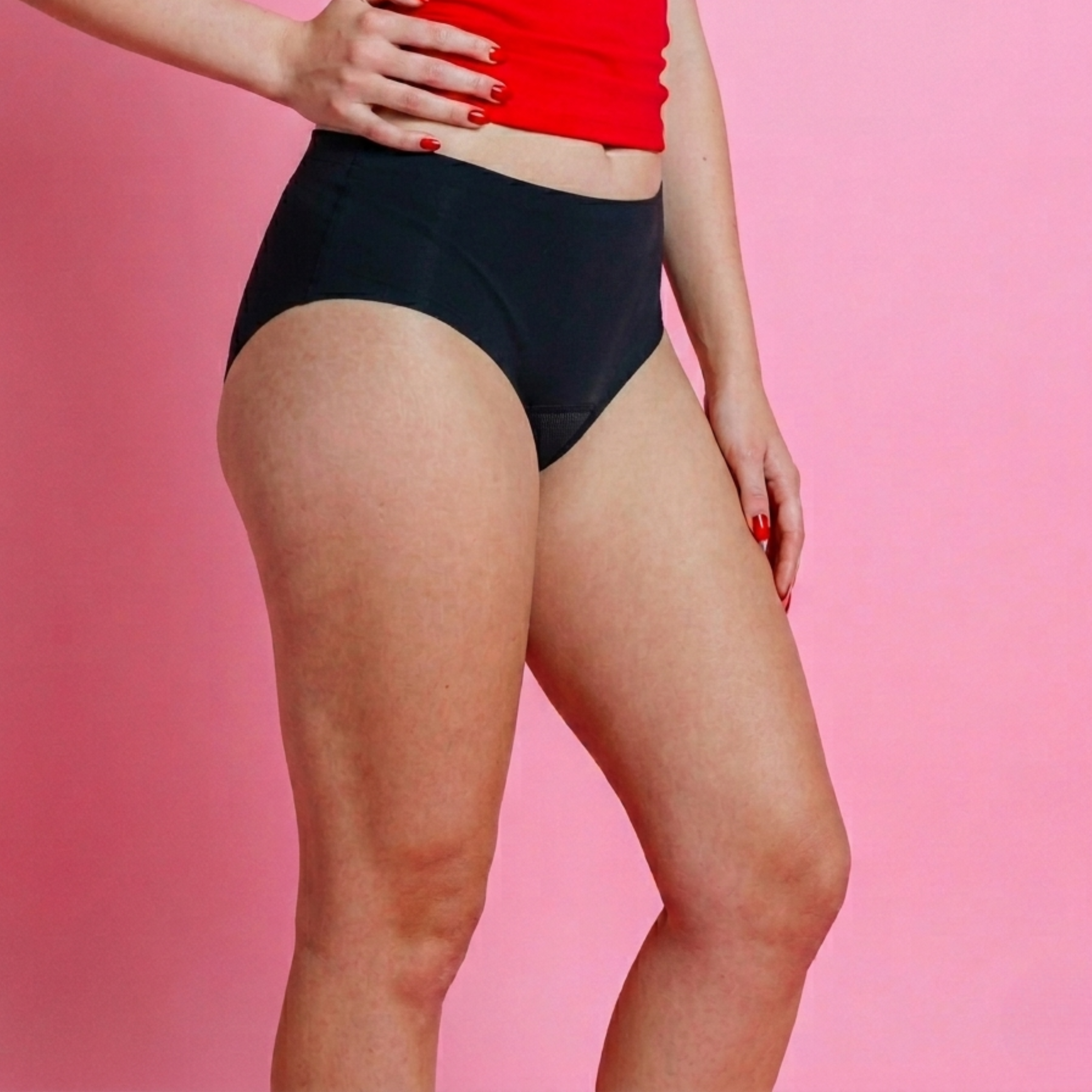
Pads are often an easy place to begin because they sit inside ordinary underwear and don’t need to be inserted into the vagina. Period underwear is another simple option. It looks and feels much like regular underwear but contains absorbent layers designed to manage menstrual flow.
For young people nervous about leaks at school or overnight, period underwear can feel particularly reassuring because there’s nothing to position or remember to insert.
Reusable pads offer another external option and can be washed and used again. Hello Period’s reusable period underwear and pads, for example, provide reusable period protection and can be useful either on their own or as backup while someone is still learning what their flow is like.
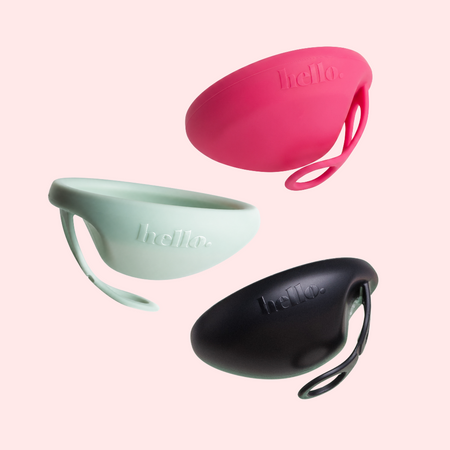
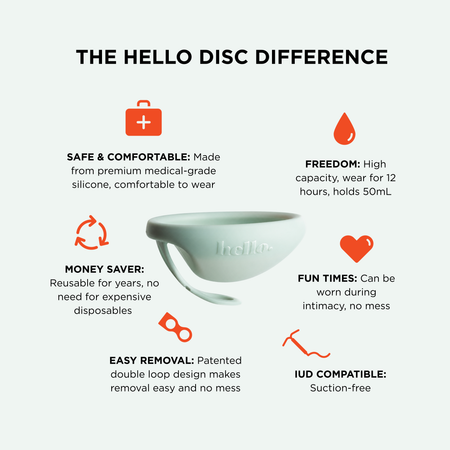
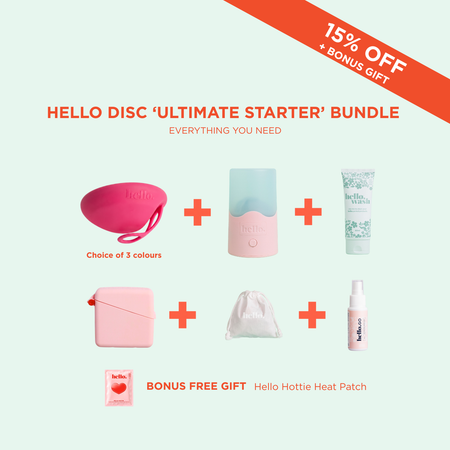
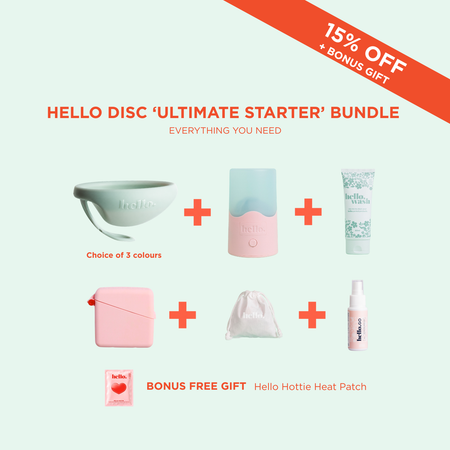
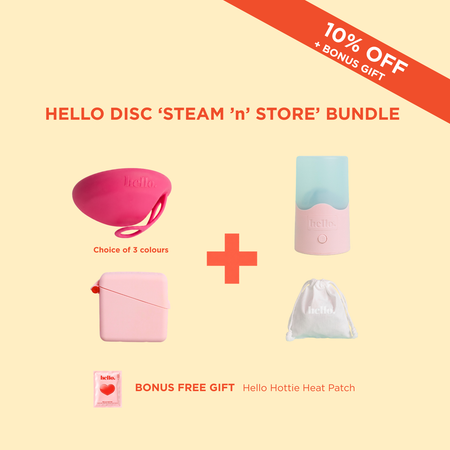
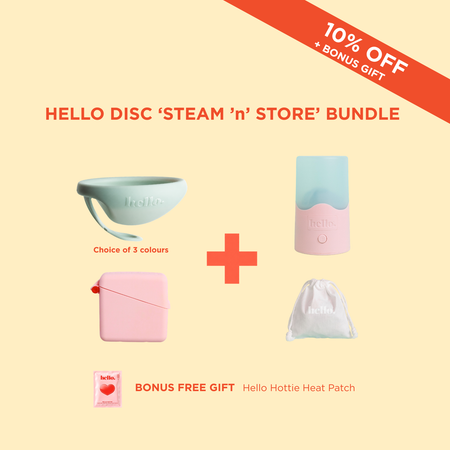
Tampons, menstrual cups and menstrual discs are internal period products. They can also be used by teenagers, including people who have only recently begun menstruating, but there’s absolutely no rush. As confidence grows, trying different period products can help you work out what suits your body, your school day, sport, swimming, sleep and lifestyle best.
And remember, no matter what product you use, you will likely experience an unexpected leak at some stage. It happens to almost everyone and isn’t something you should feel embarrassed or ashamed about.
What happens if your first period arrives at school?
This is one of the biggest worries for many tweens and teens, but in reality it’s usually very manageable.
If you notice blood while you’re at school and you don’t have anything with you, tell a teacher, school nurse, friend or trusted adult. Schools deal with periods all the time and will often have period products available.
If you have started developing some of the signs we discussed above that indicate your period might be imminent, it’s a good idea to keep a period kit in your school bag just in case.
A practical first period checklist
Being prepared can make a first period feel much less daunting. You don’t need to build an enormous period survival kit but having a few basics somewhere easy to reach can make a huge difference.
For tweens and teens, a simple first period kit could include:
-
A couple of pads, reusable pads or a pair of period underwear
-
A small waterproof or zip-up bag for carrying used underwear or reusable products home
-
A small pack of unscented wipes
-
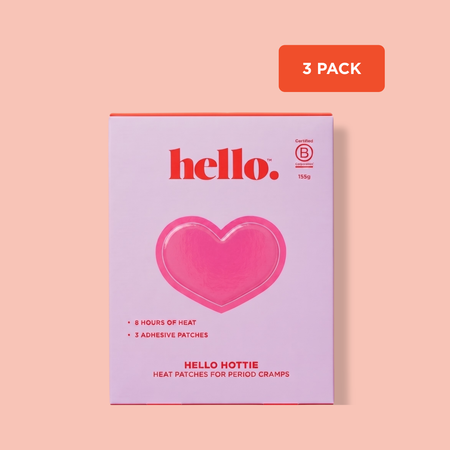
A heat pack or Hello Hottie heat patch for managing cramps
Parents can help by keeping period products somewhere easy to find at home rather than tucked away where a child has to ask for them every time. It’s also worth showing them how their period product options and how they work before they actually need them. Create a collection and leave it somewhere where your tween or teen can look at them in their own time.
It’s also a good idea to pack a mini version of the kit for school for other events where they are away from home such as sleepovers or sporting events. It’s also important to try to ensure your child knows that periods don’t need to be hidden, talked about in whispers or dealt with secretly. Being prepared should feel a bit like carrying sunscreen or a spare hair tie: useful, normal and nothing to be embarrassed about.
Parents: try not to make it weird
This may be easier said than done. A first period can feel emotional for parents because it is an obvious sign that your child is growing up but remember the arrive at a time when your child is probably becoming more self conscious and hyper sensitive about avoiding any kind of parental embarrassment.
Some kids might want to tell you everything but others might be less forthcoming and avoid even telling you their period has arrived. tBoth reactions are fine.
Unless you know your child would love it, don’t go out and get balloons, flowers or a plan a party. While ‘period parties’ are popping up more and more on social media - but just remember that for some it is a very private experience and your child might feel resentment if you are announcing it to the world. What matters most is making sure they know periods are normal, you’re available to answer questions and they can tell you if something doesn’t feel right.
Starting period conversations before menstruation begins and treating the topic as an ongoing discussion really helps when it comes to helping your child feel prepared and less anxious. It’s important to normalise periods amongst the whole household - brothers and dads should be in on the conversations too. Normalising periods helps remove the embarrassment and teasing that still surrounds something experienced by such a huge proportion of the population.
When should you talk to a doctor?
There is a very wide range of normal during puberty, so an irregular first year of periods generally isn’t a reason to panic. There are, however, times when it’s worth checking in with a doctor or healthcare provider.
If your period starts earlier than you expected or if they haven’t started by the age of 15 or 16, it’s worth checking in with your healthcare provider. Once periods have started, very heavy bleeding deserves attention too. A period that lasts longer than seven days, repeatedly soaks through period protection very quickly, causes frequent leaking overnight or leaves someone unusually tired, pale, dizzy or short of breath should be discussed with a healthcare professional.
Heavy periods in teenagers shouldn’t automatically be dismissed as something they simply have to put up with. Occasionally heavy menstrual bleeding during adolescence can sometimes be associated with an underlying bleeding disorder.
Severe period pain is worth discussing too, particularly when it regularly interferes with school, sport, sleep or everyday activities. Learning what’s normal for your body is one of the best reasons to track your periods from the beginning.
Your first period is just that: your first
There’s a lot of focus on the first period, but you don’t have to know everything on day one.
You’ll gradually learn which period products you like, how often you need to change them, whether you tend to get cramps, what your flow looks like and roughly when your next period might arrive.
There may be leaks. There may be a few “Is this normal?” questions. There may be months when your period appears precisely when expected and others when it seems to have completely forgotten the schedule. That’s all part of getting to know a new phase of your body.
For parents, one of the best things you can provide isn’t a particular product or perfectly rehearsed explanation. It’s an environment where periods aren’t embarrassing and questions are always allowed.
And for anyone waiting for their first period: you don’t need to have everything figured out. Build your period kit and be kind to yourself while your body adjusts.
You’ve got this.
Sources
-
American College of Obstetricians and Gynecologists (ACOG), Your First Period. https://www.acog.org/womens-health/faqs/your-first-period
-
NHS, Starting Your Periods. https://www.nhs.uk/conditions/periods/starting-periods/
-
American College of Obstetricians and Gynecologists, Menstruation in Girls and Adolescents: Using the Menstrual Cycle as a Vital Sign. https://www.acog.org/clinical/clinical-guidance/committee-opinion/articles/2015/12/menstruation-in-girls-and-adolescents-using-the-menstrual-cycle-as-a-vital-sign
-
Healthify New Zealand, Puberty. https://healthify.nz/health-a-z/p/puberty
-
Healthify New Zealand, Menstruation. https://healthify.nz/health-a-z/m/menstruation
-
Healthify New Zealand, Periods – How to Talk to Kids. https://healthify.nz/hauora-wellbeing/p/periods-how-to-talk-to-kids
-
UNICEF Parenting, Talking About Periods at Home. https://www.unicef.org/parenting/health/talking-about-periods-at-home
-
American College of Obstetricians and Gynecologists, Screening and Management of Bleeding Disorders in Adolescents With Heavy Menstrual Bleeding. https://www.acog.org/clinical/clinical-guidance/committee-opinion/articles/2019/09/screening-and-management-of-bleeding-disorders-in-adolescents-with-heavy-menstrual-bleeding