Light Bladder Leakage in Women: Why It Happens and What Can Help
Light bladder leakage is far more common than many think so if it starts to happen to you - you’re far from alone. You might notice it when you sneeze, during exercise or just that you need to get to the bathroom with more urgency than normal.
The official term - urinary incontinence - means that urine leaks involuntarily - ie you can’t hold it on. There’s a huge amount of shame and stigma attached to bladder leakage despite it being relatively common. The US National Institute of Diabetes and Digestive and Kidney Diseases (NIDDK), estimates 50% of women will experience urinary incontinence at some point in their lives. There’s no set time when it starts - but most commonly it starts during or after pregnancy, following childbirth, around menopause and as we get older.
Despite being common, bladder leakage isn't something women simply have to accept. Talk to your doctor or specialist about what type of support or treatment might be useful and know that there are more and more options coming to the market to help you manage leaks discretely without feeling as though you're wearing an old-fashioned incontinence nappy or diaper.
What is light bladder leakage?
Light bladder leakage generally describes small, involuntary leaks of urine. For some women, that's literally a few drops when coughing, laughing or sneezing. For others it might happen during running, jumping, lifting weights or another activity that puts additional pressure on the bladder.
There are several forms of urinary incontinence, but two are particularly common in women.
Stress urinary incontinence
This happens when pressure on the bladder causes urine to leak. Coughing, laughing, sneezing and exercise are classic triggers. The "stress" in the name refers to physical pressure rather than emotional stress.
Urgency urinary incontinence
This involves a sudden and difficult-to-control urge to urinate, sometimes resulting in leakage before reaching the bathroom. Some women experience characteristics of both, which is known as mixed urinary incontinence.
Knowing what tends to trigger your bladder leakage can be useful because different types of incontinence may require different approaches to treatment.
At what age does bladder leakage start in women?
While there isn't a particular age when light bladder leakage begins - for example, some women first notice bladder leakage during pregnancy or after giving birth - it definitely becomes more common as people age.
Pregnancy and childbirth can place significant demands on the pelvic floor, which plays an important role in supporting the bladder and maintaining continence and are often the leading cause of bladder leakage for those under 40 years old.
As women get older, changes associated with menopause can also affect the tissues and structures involved in bladder control and, as a result, urinary incontinence becomes increasingly common.
Light bladder leakage isn't exclusively an older woman's issue but regardless of when it starts, investigating the ‘why’ is important.
Why does bladder leakage happen?
Bladder control depends on a surprisingly coordinated system of muscles, connective tissue and nerves.
The pelvic floor muscles sit underneath the pelvic organs and help support the bladder, uterus and bowel. Along with the muscles surrounding the urethra, they play an important role in keeping urine inside the bladder until you're ready to go.
If those muscles and supporting tissues become weakened, stretched or less effective, additional pressure on the abdomen can sometimes overcome the mechanisms keeping the urethra closed.
That's why a sneeze can suddenly become problematic.
Running, jumping, coughing, laughing and lifting heavy objects can all rapidly increase pressure within the abdomen. If the pelvic floor and urethral support aren't able to counter that pressure effectively, a small amount of urine can escape.
Pregnancy and childbirth can change bladder control
Pregnancy and childbirth are two of the most recognised factors associated with urinary incontinence in women.
During pregnancy, the pelvic floor is supporting increasing weight while hormonal and physical changes affect the surrounding tissues. Childbirth - particularly vaginal childbirth - can then stretch or affect the pelvic floor muscles, nerves and connective tissues involved in bladder support.
Some women notice bladder leakage while pregnant. Others experience it shortly after giving birth. For some, symptoms don't become particularly noticeable until years later.
The NIDDK includes pregnancy, childbirth, menopause and pelvic organ prolapse among factors that can contribute to stress urinary incontinence in women.
Hello Period's reusable underwear and pads can also be used for light bladder leakage during and after pregnancy. They aren't a treatment for incontinence, but they can provide high quality, discreet protection while you're recovering or seeking advice about persistent symptoms. Hello Period’s underwear and pads can be used for leaks associated with coughing, sneezing, laughing or lifting during pregnancy and postpartum.
What does menopause have to do with bladder leakage?
Bladder leakage is often associated with menopause, although the relationship isn't quite as simple as menopause suddenly causing incontinence. Hormonal changes around perimenopause and menopause can affect tissues within the urinary and genital tract. At the same time, normal age-related changes can affect muscle strength, bladder capacity and the structures involved in supporting the bladder and urethra.
This is one reason some women first become aware of changes in bladder control during their forties or fifties. It’s a bit of a cluster f**k of a time for many women because there are quite a few changes happening simultaneously: periods may become less predictable, heavier or lighter during perimenopause; hormonal shifts often cause changes in mood, and weight and, to top it all off, occasional bladder leakage may also begin appearing. That means absorbent protection that can comfortably handle more than one type of fluid can be particularly practical during this stage of life!
Bladder leakage isn't always about age
Age, childbirth and menopause are only part of the story. Constipation can place additional pressure on the pelvic floor. Chronic coughing repeatedly increases abdominal pressure. Some medications and health conditions can affect bladder function, while caffeine and alcohol can make urinary symptoms worse for some people.
Urinary tract infections can also cause temporary urgency and leakage so if symptoms appear suddenly, they shouldn’t be dismissed as aging or weak pelvic floor. It maybe something that can actually be resolved.
If your bladder habits change suddenly, you have pain when urinating, notice blood in your urine, find it difficult to empty your bladder or experience other unusual symptoms, it's a good idea to speak with a healthcare professional.
Can pelvic floor exercises help bladder leakage?
For many women with stress or mixed urinary incontinence, pelvic floor muscle training can help. Pelvic floor exercises are designed to strengthen and improve the coordination of the muscles supporting the bladder and urethra. When performed correctly and consistently, they can improve the body's ability to counter increases in abdominal pressure.
Technique is important, however. Doing hundreds of random squeezes isn't necessarily better, particularly if you're not contracting the correct muscles! A pelvic health physiotherapist can assess pelvic floor function and provide exercises based on your individual needs. Healthcare guidelines generally recommend supervised pelvic floor muscle training as a first-line treatment for stress and mixed urinary incontinence. For urgency-related incontinence, bladder training may also be recommended.
What can you wear for light bladder leakage?
The products available for bladder leakage have changed enormously - for the better.
For women experiencing occasional or relatively light leaks, bulky disposable incontinence pads aren't necessarily the only option these days. Thin, washable absorbent underwear, reusable pads and liners can provide another form of protection while feeling much more like the underwear and period products you already wear.
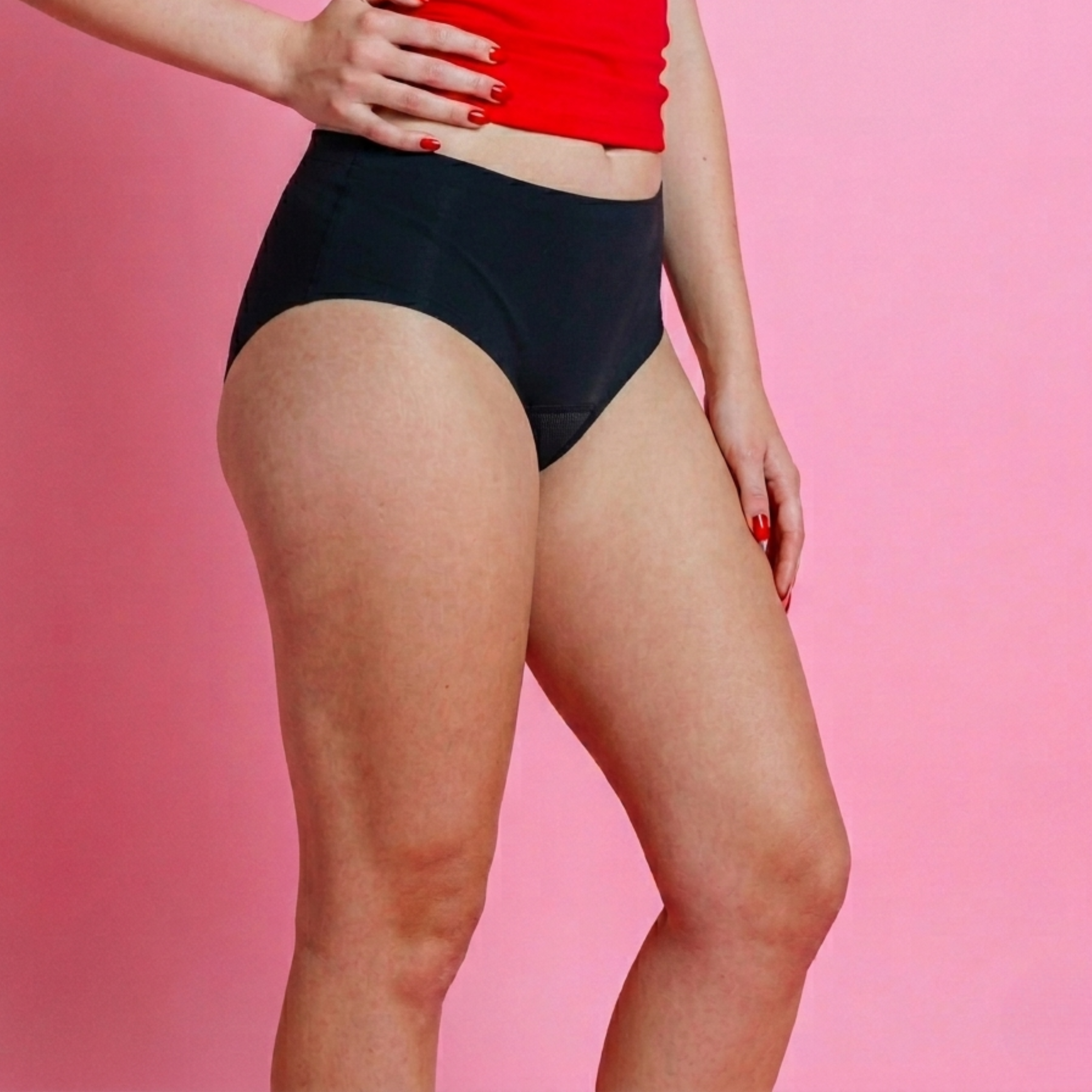
Hello Period's Hello Undies range is designed for periods but is also suitable for light bladder leakage and postpartum care. The underwear has a thin absorbent gusset, quick-wicking top layer and a leakproof seal around the edge of the gusset. Depending on the style, absorbency ranges from 10ml in the Sweet Cheeks thong to 50ml in the Best in Show boxer.
That gives women a choice depending on how much backup they want. Someone experiencing the occasional few drops during exercise may have very different needs from someone experiencing more regular leakage.
The fact that the protection is built into underwear can also make it a particularly discreet option. There isn't necessarily an additional product to position or change, and several of the Hello Undies styles are seamless and designed with a thin absorbent gusset rather than the bulk traditionally associated with incontinence underwear.
Reusable pads and liners for bladder leakage
For women who prefer wearing their regular underwear, a washable liner or pad is another option.
Hello Period's Fresher Than A Daisy reusable liner absorbs up to 10ml and is designed to be ultra thin, making it suited to very light leakage and everyday backup. It uses quick-wick fabric to move moisture away from the body and has adjustable fasteners and silicone grip underneath to help hold it in place.
For slightly more protection, the Ride or Die reusable pad holds up to 30ml and combines a thin profile with absorbent, leakproof fabric technology.
The Hello Period pad and liner range is specifically described as suitable for light bladder leakage as well as periods and postpartum care. They're washable and reusable, which can also make sense for someone who experiences occasional leaks regularly rather than wanting to continually buy disposable liners.
It's important to choose protection appropriate for the amount of leakage you're experiencing. Products intended for light bladder leakage aren't designed to manage a complete emptying of the bladder. If leakage is substantial, happening frequently or increasing, it's worth discussing it with a healthcare professional rather than simply moving to increasingly absorbent products.
Discreet protection can make a bigger difference than you might think
The physical amount of urine involved in light bladder leakage may be small, but its effect on confidence can be surprisingly large. You don’t want it to impact your life in a way that stops you doing the things you enjoy.
This is where discreet protection can be a total game changer and give you your confidence back.
A thin liner, reusable pad or pair of absorbent underwear can help remove some of the anxiety you might feel with LBL. High-quality absorbent fabrics now make it possible to create protection that is substantially thinner and more discreet than many women expect.
Hello Period's reusable pads, liners and absorbent underwear are designed to wick moisture away quickly while providing leakproof protection and our underwear and pad ranges are suitable for both periods and light bladder leakage.
When should you talk to a doctor about bladder leakage?
If bladder leakage is happening regularly, getting worse or changing the way you exercise, work, travel, socialise or go about everyday life, it's worth mentioning it to your GP or another qualified healthcare professional. Depending on the cause and type of incontinence, treatment can include pelvic floor physiotherapy, bladder training, lifestyle changes, medication and other medical or surgical options.
You should also seek medical advice if bladder changes are accompanied by pain when urinating, blood in the urine, recurring urinary infections, difficulty emptying your bladder or a sudden significant change in urinary habits.
Is light bladder leakage normal?
While it is common, that doesn't mean it should automatically be considered an unavoidable part of being a woman or getting older.
What we do know is that light bladder leakage can start at any age and, while it affects a significant number of women, treatments are available and managing the practical side of it no longer has to mean relying solely on bulky disposable incontinence products.
What is still needed, however, is for the conversation about light bladder leakage to become less stigmatised. Talking not only helps others feel less embarrassed or anxious if or when it starts happening to them but it can also highlight the need for more investment into medical treatments and products. When half of women experience urinary incontinence at some point in their life, it really shouldn't be a conversation anyone feels embarrassed to have.
Frequently asked questions about light bladder leakage
What age does bladder leakage usually start?
There isn't a specific age. Bladder leakage can happen during pregnancy or after childbirth, so some women experience it in their twenties or thirties. It generally becomes more common with age and may also become more noticeable during perimenopause and after menopause.
Why do I leak urine when I sneeze or exercise?
Leakage during coughing, sneezing, running, jumping or lifting is commonly associated with stress urinary incontinence. These activities increase pressure inside the abdomen and on the bladder. If the pelvic floor and structures supporting the urethra aren't able to counter that pressure sufficiently, a small amount of urine can leak.
What is best to wear for light bladder leakage?
The right protection depends on how much you're leaking. For occasional light leakage, thin absorbent underwear or reusable bladder leakage liners can provide discreet protection. Hello Period's absorbent underwear and reusable pad and liner range are designed to manage periods as well as light bladder leakage and postpartum needs.