Period Poos: Why Your Period Can Affect Your Gut
For many people, a period brings more than cramps, bleeding and bloating. It can also bring a noticeable change in bowel habits. ‘Period poos’ are often looser, sometimes full blown diarrhoea that can make shark week even more hectic.
You might find yourself needing to go more often, dealing with looser stools, feeling unusually constipated in the days beforehand, or experiencing a combination of period cramps and gut cramps at the same time.
Despite the slightly unserious name, “period poos” are a very real and very common part of menstruation.
One study of healthy premenopausal women found that 73% experienced at least one significant gastrointestinal symptom in the days before or during their period. Abdominal pain and diarrhoea were the most commonly reported symptoms, although nausea and constipation were also common.[1]
So if your digestive system seems to behave differently at the same time every month, there is a good chance your menstrual cycle is playing a role.
Why do period poos happen?
The most likely explanation begins with the uterus. In the lead-up to a period, levels of oestrogen and progesterone fall. This hormonal shift signals the body to begin shedding the lining of the uterus.
At the same time, the body produces hormone-like substances called prostaglandins. Prostaglandins help the uterus contract so it can shed its lining. These contractions are one of the main reasons people experience menstrual cramps.
But prostaglandins do not only affect the uterus - the muscles of the digestive tract are also made from smooth muscle, and researchers believe prostaglandins may stimulate contractions there too.
Taylor Judkins, a nutrition researcher at the University of Florida who has studied menstrual-related gastrointestinal symptoms for more than a decade, explained the connection in a recent article in The Guardian.
“If you ask women about ‘period poops’ they’ll tell you they’re having menstrual cramps and those GI cramps at the same time,” she said.[4]
The leading theory is that some prostaglandins enter the bloodstream and affect the nearby bowel, encouraging it to contract more frequently. If waste moves through the digestive tract faster than usual, the result can be softer stools, diarrhoea or a more urgent need to use the bathroom.
This may help explain why digestive symptoms are often strongest during the first day or two of menstruation, when prostaglandin activity is generally higher.[2]
Why do some people get diarrhoea on their period?
Diarrhoea during a period is one of the most commonly reported gastrointestinal symptoms associated with menstruation. When the bowel contracts more frequently, it has less time to absorb water from stool. This can make bowel movements softer or more watery than usual.
Some people also find that the sensation of needing to go becomes much more urgent during the first few days of their period.
But there may be other mechanisms at play too. The vagus nerve, which helps carry signals between the brain and digestive system, has also been suggested as a possible contributor.
The vagus nerve plays an important role in the gut-brain connection and can influence digestion, intestinal contractions and fluid secretion. It is particularly responsive to stress and inflammation. Judkins has theorised that the inflammatory changes associated with menstruation may activate this pathway in some people, potentially contributing to increased bowel activity.[4]
Research in this area is still limited, however, and prostaglandins remain the most widely accepted explanation.
Why does constipation sometimes happen before a period?
Period-related gut changes do not always mean diarrhoea. For some people, the problem starts a week or two earlier in the form of constipation.
Progesterone rises after ovulation and remains elevated during the second half of the menstrual cycle before dropping shortly before menstruation. Progesterone has been associated with slower gastrointestinal motility, which means food and waste may move more slowly through the digestive system.[5]
That may explain why some people feel more constipated, sluggish or bloated in the days before their period begins. Once progesterone falls and prostaglandins increase around the start of menstruation, the pattern can reverse quite quickly.
This is why some people experience constipation before their period, followed by much looser or more frequent bowel movements once bleeding begins.
The science is not completely settled, however. As The Guardian article points out, there is still limited research into exactly how common premenstrual constipation is and precisely when it occurs across the cycle.[4]
The gut and menstrual cycle are more connected than we once thought
For a long time, menstruation was treated largely as an issue involving the uterus but experts now say hormonal changes across the menstrual cycle can have effects throughout the body, from mood and sleep to appetite, energy levels and digestion.
The digestive tract contains hormone receptors and is highly responsive to changes in the nervous system and inflammatory signalling - which is why you are probably seeing a lot more people discussing and focussing on the importance of gut health.
Research suggests that menstrual symptoms and digestive symptoms do not necessarily exist independently and studies have repeatedly shown changes in gastrointestinal symptoms across different stages of the menstrual cycle.[1,2] That connection can be particularly noticeable in people who already have gastrointestinal conditions.
IBS, endometriosis and more severe period-related gut symptoms
People with irritable bowel syndrome, or IBS, often report that their symptoms worsen around menstruation. Cramping, diarrhoea, constipation and bloating may all become more noticeable as hormone levels shift.
A similar overlap seems to exist with endometriosis. Endometriosis can cause gastrointestinal symptoms including bloating, constipation, diarrhoea and painful bowel movements. Research has also found a significant association between endometriosis and IBS, which can make distinguishing between the two conditions difficult.[6,7]
This is important because digestive discomfort around a period is common, but severe pain should not automatically be dismissed as simply part of menstruation.
In The Guardian, Judkins makes this distinction clearly. “It’s very common, and some will tell you that it’s normal,” she says, “but it doesn’t mean you should have to live with this drastic decrease in your quality of life.”[4]
If bowel movements become extremely painful during your period, if symptoms regularly interfere with work, school or exercise, or if they are becoming progressively worse, it is worth discussing them with a healthcare professional.
Can anything help with period poos?
Unfortunately, there is no single treatment designed specifically for menstrual-related gut symptoms. The research remains surprisingly limited, particularly given how common these symptoms appear to be.
Judkins and her team have conducted research into probiotics, including a randomised trial looking at whether they might reduce menstrual gastrointestinal symptoms. Probiotics improved indigestion in that study, but did not significantly improve diarrhoea.[4]
But there are a few simple steps you can take that can help manage symptoms.
Staying well hydrated is particularly important if you are experiencing loose stools or diarrhoea. Diet can also make a difference. Judkins recommends eating a balanced diet with plenty of fibre from fruit, vegetables, legumes and whole grains, while being aware that greasy or particularly rich foods can make diarrhoea worse for some people.[4]
That does not mean dramatically changing your diet for a few days each month. A consistent intake of fibre and fluids is generally more helpful than suddenly increasing fibre when you are already feeling bloated or uncomfortable.
It may also be useful to pay attention to foods and drinks that seem to affect you personally. For example, for some, caffeine can stimulate bowel activity. If you already notice an increase in urgency during your period, large amounts of coffee or energy drinks may make that more noticeable.
Can ibuprofen help?
Anti-inflammatory medicines such as ibuprofen work partly by reducing prostaglandin production which is why they can be effective for menstrual cramps.
Reducing prostaglandins could theoretically also lessen some of the bowel contractions associated with menstruation. There is a complication, however - anti-inflammatories themselves irritate the digestive tract and may cause indigestion, stomach discomfort or diarrhoea. They can also be unsuitable for some people with gastrointestinal conditions, including certain inflammatory bowel diseases.[8] so if in doubt, check with your doctor first.
Managing your period when your gut is also playing up
One of the reasons we talk about subjects like this at Hello Period is that periods are rarely just about managing bleeding. They can affect how you sleep, what you wear, whether you feel like exercising, how comfortable you feel at work and, sometimes, how often you need to find a bathroom.
Good period care cannot fix digestive symptoms but it can help remove some of the practical stress that comes with managing several symptoms at once.
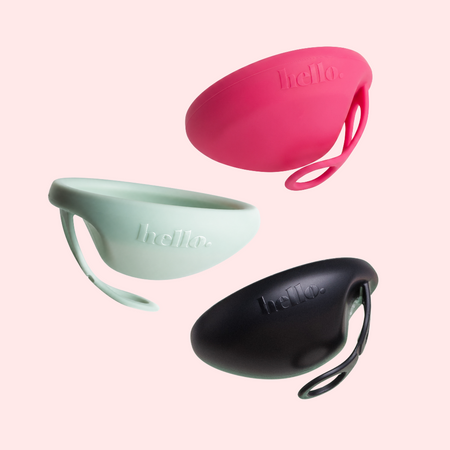
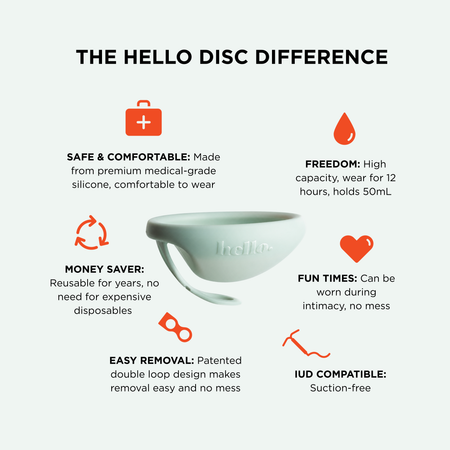
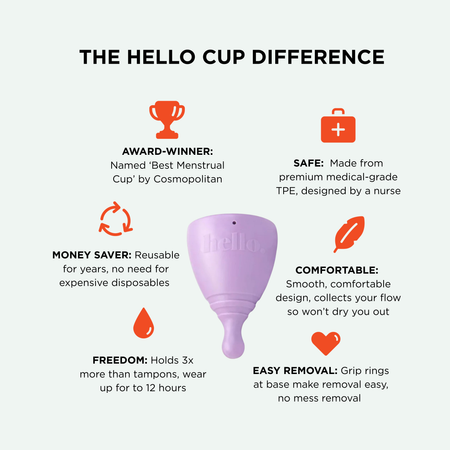
For people who prefer internal period care, Hello Disc can be worn for up to 12 hours, depending on individual flow, and does not necessarily need to be removed each time you use the bathroom.
For those who prefer external protection, Hello Periods absorbent underwear and reusable pads offer another way to manage bleeding. They’re high capacity without the bulk.
Heat can also be comforting for period cramps and Hello Hottie air-activated heat patches stick to the outside of underwear and provide continuous warmth for up to eight hours.
These products are not treatments for diarrhoea, IBS, endometriosis or other gastrointestinal conditions. They are simply ways to make the period side of things feel easier when your body is already dealing with enough.
When should period-related bowel symptoms be checked?
Some change in bowel habits around menstruation is common. What matters is the severity, duration and impact of those symptoms.
If you experience severe pelvic or abdominal pain, very painful bowel movements, persistent diarrhoea, blood in your stool, black or tarry stools, unexplained weight loss, fever, dehydration or symptoms that interfere significantly with your daily life, speak to a healthcare professional.
It is also worth seeking advice if your symptoms are new or noticeably worsening.
Tracking your symptoms over a few cycles can be useful. Recording when they occur in relation to your period, along with changes in bleeding, pain, bloating and bowel habits, may help your doctor see patterns more clearly.
Why do we still know so little about period-related gut symptoms?
Perhaps the most surprising thing about period poos is not that they happen, but how little research exists on something so many people experience.
Judkins has been studying the relationship between menstruation and gastrointestinal symptoms for more than a decade. “When you search these keywords, it’s my name that comes up,” she told The Guardian.[4] Her point was not that the research area is crowded, but the opposite. Unfortunately menstrual health has been under-researched over the years and symptoms that affect people around their periods have often been dismissed as inconvenient rather than worthy of investigation.
When a symptom is not widely researched, healthcare professionals have fewer evidence-based treatments to draw from. Patients may also be less likely to raise those symptoms because they assume there is nothing that can be done. That is slowly beginning to change, thankfully.
The more openly we talk about the full experience of menstruation - not just bleeding, but also the pain, digestion and energy level changes that comes with it - the easier it becomes to understand what is common, what is manageable and what deserves medical attention.
Period poos might not be the most glamorous part of menstrual health, but they are real, common and worth talking about.
References
-
Bernstein MT, Graff LA, Avery L, et al. Gastrointestinal symptoms before and during menses in healthy women. BMC Women's Health. 2014;14:14.
https://pmc.ncbi.nlm.nih.gov/articles/PMC3901893/ -
Judkins TC, Dennis-Wall JC, Sims SM, et al. Stool frequency and form and gastrointestinal symptoms differ by day of the menstrual cycle in healthy adult women taking oral contraceptives. BMC Women's Health. 2020;20:136.
https://link.springer.com/article/10.1186/s12905-020-01000-x -
American College of Obstetricians and Gynecologists. Dysmenorrhea: Painful Periods.
https://www.acog.org/womens-health/faqs/dysmenorrhea-painful-periods -
Landman K. The monthly scourge of ‘period poop’ is real. Here’s why your gut acts up. The Guardian. 2 August 2026.
https://www.theguardian.com/wellness/2026/aug/03/period-menstrual-cycle-poops -
Wang F, et al. Impact of progesterone on the gastrointestinal tract: a comprehensive literature review. Climacteric. 2022.
https://pubmed.ncbi.nlm.nih.gov/35253565/ -
Endometriosis and gastrointestinal symptom literature.
https://pmc.ncbi.nlm.nih.gov/articles/PMC12621312/ -
Nabi MY, et al. Endometriosis and irritable bowel syndrome: A systematic review and meta-analyses. Frontiers in Medicine. 2022.
https://pmc.ncbi.nlm.nih.gov/articles/PMC9357916/ -
NHS. Ibuprofen for adults / Non-steroidal anti-inflammatory drugs (NSAIDs).
https://www.nhs.uk/medicines/ibuprofen-for-adults/
This article is for general information only and is not a substitute for personalised medical advice. Speak to a qualified healthcare professional if you are concerned about your symptoms.