Perimenopause and Your Period: What’s Changing, Why It’s Happening and What Can Help
If you are in your 40s and your once-predictable period has suddenly changed there’s a good chance you are entering the unpredictable world of perimenopause.
Your cycle might suddenly become shorter, heavier, longer, more ‘clotty’ - or it could even disappear for weeks on end before appearing again without warning. At the same time, you might start waking up hot at 3am, forgetting why you walked into a room or wondering why your mood has developed a mind of its own. For many, perimenopause is a ride - so it’s definitely worth being aware of the possible symptoms so you can make a plan to help aleviate them - or at least give a heads up to those around you!
Perimenopause can affect much more than your periods, but changes to your menstrual cycle are often one of the first things people notice. The NHS lists changes in period pattern alongside symptoms including hot flushes, night sweats, sleep problems, mood changes and problems with memory or concentration. (nhs.uk)
The reassuring part? There is a biological reason for the apparent chaos.
Here's what is happening, what you might notice and why you might need to change what period products you use to help you get through.
What is perimenopause?
Perimenopause means "around menopause" and describes the transitional stage leading up to menopause.
During this time, the ovaries begin changing the way they function and hormone production becomes less predictable. Menstrual cycles can change as ovulation becomes less regular and levels of reproductive hormones fluctuate. The World Health Organization describes perimenopause as the period beginning when signs of the menopausal transition first appear and ending one year after the final menstrual period. (World Health Organization)
Menopause itself is actually a point in time rather than a long phase. Clinically, menopause is reached after 12 consecutive months without a menstrual period, provided there is no other medical explanation for the absence of periods. (National Institute on Aging)
Everything leading up to that milestone is the transition.
Perimenopause generally begins sometime during the 40s, although some people notice changes earlier or later. It can continue for several years, and the experience varies considerably between individuals. (Mayo Clinic)
In other words, there isn't a universal perimenopause calendar that your body follows.
What are the first signs of perimenopause?
For many people, the first clue is a change in their period.
You may notice:
-
periods coming closer together
-
longer gaps between periods
-
periods lasting more or fewer days
-
heavier menstrual bleeding
-
lighter periods
-
skipped periods
-
spotting or unexpected bleeding
-
changes in cramps or other period symptoms.
The Menopause Society notes that as people enter perimenopause, periods can become shorter or longer, while menstrual flow may become either heavier or lighter. These changes are linked to increasingly erratic ovarian hormone production and less-frequent ovulation. (The Menopause Society)
But period changes aren't the only possible symptoms.
Other commonly reported perimenopause symptoms include hot flushes, night sweats, changes in sleep, mood changes, vaginal dryness, problems with memory or concentration and changes in sexual comfort. Not everyone experiences all of these symptoms, and some people notice very few symptoms outside of changes to their cycle (nhs.uk) which is why one person's perimenopause can look completely different from another's.
Why do periods change during perimenopause?
Essentially it comes down to changes in your hormone levels. Throughout a typical menstrual cycle, hormones including oestrogen and progesterone help coordinate ovulation and changes in the lining of the uterus, but as you move through the menopausal transition, ovarian function becomes less predictable. Ovulation may happen less regularly and hormone levels can fluctuate considerably from one cycle to the next. (The Menopause Society) This is why your previously dependable 28-ish-day cycle might suddenly start behaving very differently.
You might have a shorter cycle one month, a much longer one the next, skip one completely and then find yourself dealing with a particularly heavy period with huge clots.
.
Why can periods get heavier during perimenopause?
Many people assume that periods should gradually become lighter and then disappear as menopause approaches - and sometimes that is the case.
But for many, including a lot of our customers at Hello Period, they do the opposite.
Heavy periods during perimenopause are recognised as part of the changing bleeding patterns that can occur during the menopausal transition. (The Menopause Society)
One reason is that ovulation becomes increasingly unpredictable. Because progesterone production is closely associated with ovulation, when ovulation doesn't occur in the usual way, the hormonal pattern controlling the growth and shedding of the uterine lining changes too. Combined with fluctuating ovarian hormones, this can result in irregular, prolonged or heavier episodes of bleeding.
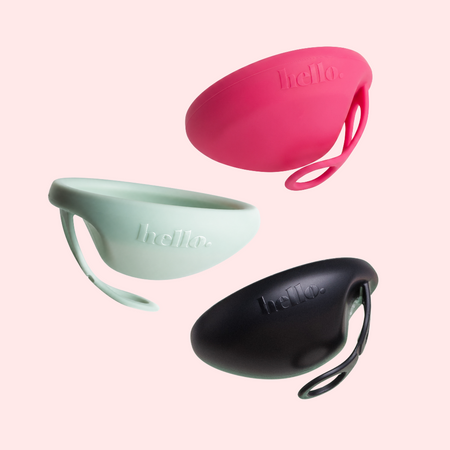
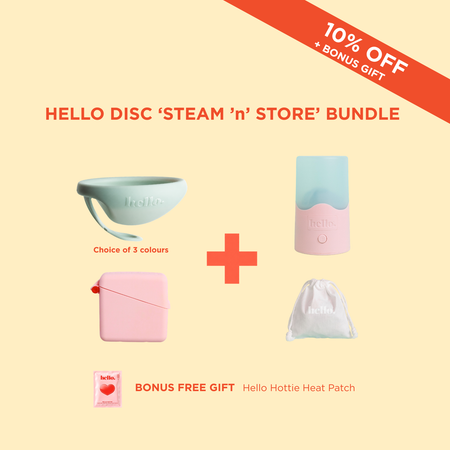
In practical terms, a perimenopausal period might suddenly involve considerably more blood than you're accustomed to managing. You may find the period products you’ve used for years suddenly aren’t up for the job. We hear from a lot of women who are hesitant about switching to a Hello Disc or period underwear because they are certain the end of their periods must be coming soon. Unfortunately, for many, this stage can last years. So if you need period care that has higher absorbency, we always recommend making the switch. High capacity period products such as the award-winning Hello Disc can give you freedom from constant changes and the cost going through disposables on high rotation.
How heavy is a heavy period?
There's no need to measure every millilitre of your period to decide whether something has changed.
ACOG defines heavy menstrual bleeding as excessive menstrual blood loss that interferes with a person's physical, emotional, social or material quality of life. (ACOG) We think that’s a good way to look at it. Heavy periods are periods that impact your daily life in a less than ideal way.
The NHS suggests signs that your periods may be heavy can include needing to change a pad or tampon every one to two hours, using two types of period products together, bleeding through clothing or bedding, bleeding for longer than seven days or passing large blood clots. (nhs.uk)
Is the bleeding significantly heavier than what's normal for you, or is it interfering with your life?
If the answer is yes, it's worth discussing with a healthcare professional rather than assuming perimenopause automatically explains everything.
When should you talk to a doctor about changing periods?
Changes in menstruation are common during perimenopause, but that doesn't mean every change should automatically be attributed to hormones.
Heavy or unusual uterine bleeding can have other causes, and healthcare professionals can investigate whether something other than the menopausal transition might be contributing. (ACOG)
It's especially important to seek medical advice if bleeding is very heavy, lasts considerably longer than usual, is happening between periods, is affecting your everyday life or is accompanied by symptoms that concern you. If you are not happy with the advice you receive, always seek a second opinion. Heavy periods are a lot to deal with and we see too many feel they have to put up with them.
Heavy menstrual bleeding can also contribute to iron deficiency and iron-deficiency anaemia, which may cause symptoms such as tiredness or weakness. The relationship between heavy menstrual bleeding and iron deficiency is well established in medical literature. (ACOG)
And one particularly important distinction: once you have reached menopause — meaning you've gone 12 months without a period — any subsequent vaginal bleeding should be checked by a healthcare professional. The NHS recommends medical assessment even if postmenopausal bleeding happens only once or involves only a small amount of spotting. (nhs.uk)
Why perimenopause is a good time to rethink your period care
Most of us develop a period routine fairly early in life. You find the tampon, pad, cup or whatever else works for you and then continue buying it for years without thinking terribly hard about it.
Then perimenopause arrives and changes the brief. Your period may be heavier, unpredictable and totally different in length.
When these changes start to appear, flexibility and capacity matter a lot more when it comes to how you manage your flow.
This can be a great time to explore reusable period products because rather than relying on one solution for every day of your period, you can create a small ‘period-care wardrobe’ for different types of flow.
A high-capacity menstrual disc might suit heavy days or times when you want longer-lasting internal protection. Period underwear might be perfect for unpredictable days or overnight backup. Reusable pads give you another external option when you don't feel like wearing an internal product.
There's no rule saying you need to choose one period product and remain loyal to it forever. Your body changed the arrangement so we reckon you're allowed to change it too.
A menstrual disc can be a game changer for heavier periods
If increased flow is one of your biggest perimenopause frustrations, capacity suddenly becomes very relevant.
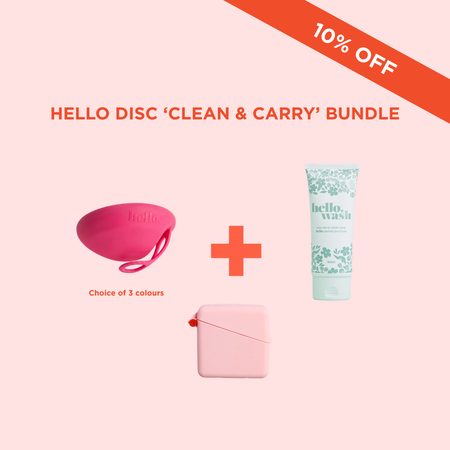
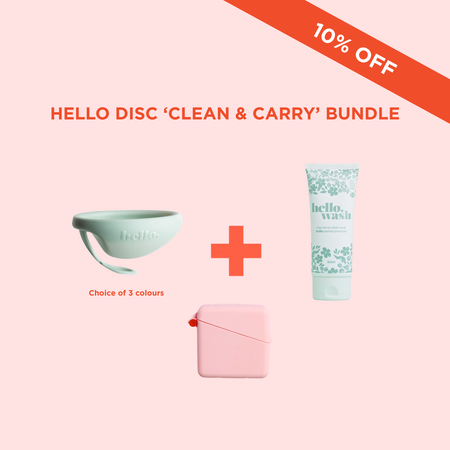
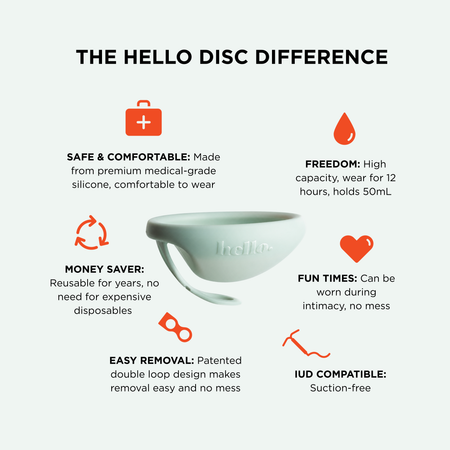
The Hello Disc holds up to 50ml of menstrual fluid, which is the equivalent to around 10 regular tampons based on Hello Period's stated 5ml comparison and can be worn for up to 12 hours before removal, emptying and cleaning, depending on your flow. (Hello Period)
That's substantially more collection capacity than many traditional disposable period products such as tampons and pads, which is particularly useful when your flow has become heavier or less predictable.
A menstrual disc sits inside the vaginal canal below the cervix and collects menstrual fluid rather than absorbing it. Hello Disc is made from medical-grade silicone and uses a patented double-loop tab designed to make removal easier. (Hello Period)
Of course, heavier flow may mean some people still need to empty their disc more often than the maximum recommended wear time. Your personal flow always determines how frequently period protection needs attention.
But if you're currently changing disposable products constantly on heavy days, a higher-capacity reusable option may be worth investigating.
Period underwear makes unpredictable days much easier
One slightly cruel feature of perimenopause is that periods can become both less predictable and more demanding.
A period that used to arrive like clockwork might suddenly be four days early or even two weeks late.
Period underwear can be particularly useful during this stage because it gives you protection without needing to predict exactly when bleeding will begin.
Wear a pair on a day when you suspect your period might arrive, use them on lighter days or pair them with another product as additional peace of mind on very heavy days. We know of many people who wear Hello Period’s absorbent underwear every day. The gusset is absorbent but not bulky so they actually feel and look like normal underwear anyway.
Hello Period's current seamless Hello Undies range includes a range of styles and absorbencies. For example, the Just Briefly mid-waist brief holds 30ml, equivalent to six regular tampons using Hello's 5ml comparison, while Sweet Cheeks period thongs hold 10ml for lighter-flow days. They’re all machine washable and made with OEKO-TEX® STANDARD 100 fabrics, with no added PFAS. (Hello Period)
Reusable pads are worth rediscovering too
If your last memory of pads involves something approximately the thickness of a small mattress, reusable pads may surprise you.
They're particularly handy during perimenopause because they can be used on their own, kept in your bag for surprise periods or added as another layer of protection during heavy bleeding.
Hello's Overnight Success reusable maxi pads are designed specifically for overnight and heavy-flow use. They have a stated 60ml absorbency capacity, equivalent to six super tampons using Hello's 10ml comparison, with a longer shape, quick-wick technology and adjustable dome fasteners. They're also machine washable and not treated with PFAS. (Hello Period)
Despite the name, there is absolutely no period-police rule restricting Hello Period’s maxi pads to bedtime.
If your heaviest flow happens at 11am on a Tuesday, use the maxi pad at 11am on a Tuesday.
Mixing period products can make perimenopause easier
One of the most useful approaches during perimenopause is to stop expecting a single period product to do everything and start thinking in combinations. Heavy days might mean a Hello Disc / period underwear combo for extra peace of mind. Unpredictable ‘periods’ might mean you start wearing period underwear in advance of when you think Aunt Flo might turn up. For overnight heavy flows, you might prefer the long coverage of a reusable maxi pad.
The point isn't to buy more stuff for the sake of it, it's to make your period care adapt to your body instead of continually battling a system that no longer works.
Can you still get pregnant during perimenopause?
Yes. Irregular periods don't automatically mean ovulation has stopped altogether. Even as menstrual cycles become less regular during the menopausal transition, ovulation can still occur, meaning pregnancy remains possible until menopause has been reached.
So if avoiding pregnancy matters to you, don't use irregular or skipped periods as contraception. Talk to your healthcare provider about appropriate contraception during perimenopause.
How long does perimenopause last?
Unfortunately, there isn't a countdown clock. Perimenopause can last for several years and symptoms can change throughout the transition. (World Health Organization)
You may have months when your periods feel relatively normal, followed by months when they're anything but. Symptoms may come and go too.
However, eventually, menstrual periods will stop. Once you've gone 12 months without one, you've reached menopause. (National Institute on Aging)
Your changing period isn't something you just have to put up with
We talk a lot about getting your first period. We talk much less about what happens as you approach your last one.
Perimenopause deserves considerably more airtime because it can affect periods, sleep, mood, comfort, confidence and everyday life for years.
Knowing what is happening can make the whole experience feel a little less mystifying.
And if your period has changed, your period care can change with it.